
Onboarding, Benefits & Retention
Payroll Is Culture Too: Why Timely Pay and Employee Experience are Inseparable


It’s the evening before payday. Across the country, millions of employees open their banking apps out of habit, anticipation, or low-level anxiety – often all three at once. Rent is due. The car insurance auto-debits at midnight. The grocery run needs to happen before the weekend.
The paycheck isn’t there yet. They refresh, still nothing. The HR portal says: processing.
For most employers, this is an administrative footnote – a timing hiccup that will resolve itself by morning. For the employee on the other side of that screen, it’s something else entirely: a moment where the foundational promise of their employment quietly flickers.
This is not a story about underpaid workers. It’s a reality of when payroll stops being invisible – and why, in 2026, making it visible for the wrong reasons costs organizations far more than they realize.
Payroll is the foundation beneath every other culture initiative
The HR industry has spent the last decade building an increasingly sophisticated vocabulary around employee experience. Psychological safety, belonging, holistic wellbeing, purpose-driving work – these concepts are not hollow, they are genuinely important, and the research behind them is real.
But there is a layer beneath all of it that really earns its own conference session or thought leadership piece: the basic, recurring act of paying people on time, in full, without error.
Payroll is the floor. Everything else: engagement, culture, belonging – is built on top of it.
Employees rely on their paychecks to manage their actual lives – rent, bills, savings, loans, the childcare costs due on the first of the month, and the gas to get to work on time. The paycheck is not an HR metric; it’s the connective tissue between someone’s work and the life they are trying to build. When that tissue tears, even slightly, everything above it becomes unstable.
Where the workforce actually stands in 2026
Before we talk about what payroll errors do, we need to understand who is on the receiving end. Because the picture of the 2026 workforce is one of surface-level stability with significant hidden fragility underneath.
The headline numbers can look reassuring. Employee retention indices are up compared to 2024. Workers are less likely to quit into uncertainty than they were during the peak of “Great Reshuffle.” But the underlying financial reality of most employees has not improved – it has quietly worsened.
- 57% of employees live paycheck to paycheck – up 4 points from last year
- 49% of US workers say their wages never catch up with the cost of living
- 61% say money is their primary life stressor heading into 2026
- 51% say falling behind on pay is their top workplace worry this year
These are not numbers from a workplace in crisis – these are the numbers of a workforce that is managing, but with little margin. One missed paycheck, one processing error, one unexplained discrepancy in a payslip, and “managing” becomes something much harder.
The same employees who are financially stretched are also staying in their current roles not because they are thriving, but because the external market feels risky. They are anchoring to stability. The employer-employee contract right now echoes a familiar promise: I will stay, as long as you remain reliable. In calm and in uncertainty.
Break that promise, even once, and the anchor lifts faster than most retention data would suggest.
“Fairly paid” doesn’t mean financially cushioned
Here is the counterintuitive part that HR leaders need to sit with: most employees today are not demanding raises or marching on HR. Compensation dissatisfaction, while real, is not the primary reason for disengagement in 2026. The majority consider their pay roughly fair – acceptable, at least for now.
But “fairly paid” does not mean financially cushioned.
Even among employers who describe their compensation as adequate, 1 in 4 say they would need to make major life cutbacks if their salary remained exactly the same going forward.
They are fine – until they’re not. Living within a structure that has no slack. One delayed payment, one unexplained deduction, one Friday without a direct deposit, away from a very real personal crisis.
Workers are spending over a third of their paycheck within the first 12 hours of being paid, and nearly half within 48 hours – going straight to essentials. There is no buffer, there is no “I’ll sort it out next cycle.” There is just the assumption, baked into millions of financial lives, that the money will be there on the day it was promised.
What a payroll error actually costs: the four-layer cascade
Payroll errors are common. Alarmingly so: globally, the average payroll accuracy rate sits at just 78%, meaning roughly one in five payroll cycles contains some kind of mistake. In the US, more than half of all workers have experienced a pay issue at some point in their career. One in five payroll cycles still includes an error of some kind.
But the cost of those errors goes far beyond the correction itself. It cascades through four distinct layers, each compounding the last.
Layer one: immediate financial harm
When a paycheck is late or wrong, employees don’t absorb the shortfall – they can’t. Almost two-thirds of those affected end up making late payments on rent or bills, or overdrawing their accounts. Over 21% report having to borrow money as a direct result. These are not abstract inconveniences. They are real financial hits – late fees, credit impacts, the stress of an automated payment bouncing – that the employee had no part in causing.
Layer two: cognitive drain at work
Financial anxiety does not clock out. Research from PwC shows that 76% of financially stressed employees say it has negatively impacted their productivity, and 55% report spending three or more hours per week at work thinking about or dealing with their personal financial problems. Financial stress creates what researchers call a “cognitive load” – a constant background processing cost that competes directly with the ability to focus, problem-solve, and engage. The payroll error that was fixed on Thursday is still running in the background on Monday.
- 71% would feel stressed if their paycheck were even one week late
- 88% say how their company handles payroll reflects how much they are respected
- 42% report some level of relationship damage with their employer after a payroll issue
- 2x more likely to resign within 12 months after experiencing two or more payroll errors
Layer three: trust erosion
This is the silent one. Forty-two percent report some level of deterioration in their relationship with their employer after a payroll issue – even when it is resolved. Trust, once cracked, does not snap back to factory settings. It recalibrates to a lower baseline. The employee continues to show up, continues to perform. But the psychological contract between them and the organization has quietly been downgraded.
And that 88% figure from HiBob’s research deserves to be read slowly: nearly nine in ten employees are using the mechanics of payroll – its accuracy, its timing, its transparency – as a direct proxy for how much the organization values them as people. Not as a data point. As people.
Layer four: attrition
ADP’s data shows employees who experience two or more payroll errors are twice as likely to resign within 12 months. The Workforce Institute at Kronos Inc. found that 49% would actively begin searching for a new job after just two errors. And when they go, they take with them institutional knowledge, client relationships, and the fully loaded replacement cost of 1.5 to 2 times their annual salary, according to SHRM estimates.
The back-office admin issue just became a board-level financial conversation.
Why payroll reliability is a competitive advantage in 2026
There is something specific to this moment that amplifies everything above. We are in a period where employees have already adjusted their expectations downward – on promotions, on salary growth, on the realistic prospect of finding something better elsewhere. They are staying not because they feel deeply fulfilled, but because the outside world feels uncertain and their current employer feels like the safer bet.
That is a fragile form of retention. It is not loyalty built on trust and meaning. It is a kind of inertia loyalty, and it is extraordinarily easy to shatter, not with a dramatic event, but with a quiet one. A late paycheck. A payslip that doesn’t add up. Three days of unanswered emails to HR about a payment discrepancy.
In this climate, payroll reliability is one of the few concrete, tangible signals you can send that says: you are safe here. In a world saturated with uncertainty – economic, geopolitical, technological – the simple act of paying people on time, accurately, without drama, is a genuinely powerful act of organizational care.
The Eagle Hill Employee Retention Index shows that workers entering 2026 are staying primarily because external opportunities look scarcer, not because internal experience has dramatically improved. Compensation and culture indicators are up, but so is financial stress and economic anxiety. This creates a retention environment that is stable on the surface but highly sensitive to trust signals at the margins. Payroll reliability is one of those signals.
Payroll as a recurring human experience – not a process
Here is the reframe that changes everything: payroll is not a transaction. It is a recurring human experience – one that happens to every single employee, every pay cycle, for as long as they work for you.
Think about the moments in an employee’s journey that receive strategic attention. Onboarding. The first performance review. The promotion conversation. The exit interview. These touchpoints are mapped, designed, and measured.
And yet the payroll experience – which occurs twelve, twenty-four, sometimes twenty-six times per year – is typically left to run on autopilot, governed by compliance deadlines and processing schedules rather than any considered thinking about what it feels like on the receiving end.
Every payday is a touchpoint. Every one of those touchpoints is either building trust or eroding it. There is no neutral. When payroll runs flawlessly, nobody mentions it. That absence of friction IS the experience. People sleep soundly the night before payday. They arrive present on Friday morning. They feel, at some level they may not consciously articulate, that this organization is competent and that their contribution is genuinely honored.
When payroll breaks, even once, it introduces a question that lingers long after the error is corrected: if they got this wrong, what else might they get wrong
What leading HR teams are doing differently in 2026
The organizations treating payroll as a culture asset – rather than a compliance obligation – are making distinctly different decisions. The gap between them and everyone else is not primarily a technology gap. It is an attention gap. Here is what separates them:
- They invest in payroll infrastructure before a crisis forces them to.
Payroll system upgrades tend to happen reactively – after a failed implementation, a string of errors, or a compliance fine. Leading organizations treat payroll technology as strategic infrastructure with its own investment roadmap, not a line item that only comes up during vendor renewal. - They communicate about payroll proactively and transparently.
Clear, readable payslip communication reduces employee anxiety significantly. When people understand what they’re being paid, how deductions work, and why variable pay changes – they feel respected, not just processed. HiBob’s research shows 65% of employees prefer digital payroll with real-time visibility; companies that provide it report measurably higher trust scores. - They treat payroll errors as employee experience incidents, not just admin failures.
The speed and quality of recovery matters almost as much as the error itself. A fast, personal, empathetic response to a payroll mistake preserves significantly more trust than the same resolution delivered via a generic HR ticket three days later. - They extend payroll thinking into financial wellbeing.
Ninety percent of employees say employer support for financial wellness is important – nearly half say it is extremely important (HiBob, 2025). Earned wage access, financial literacy resources, retirement integration, and emergency savings tools are no longer perks. They are retention infrastructure. In 2025–2026, 70% of employers engaged in some form of financial wellness initiative – up from 59% the year before (EBRI). - They treat payroll accuracy as a governance metric, not just an HR metric.
Forward-thinking CHROs are beginning to include payroll accuracy on board-level dashboards alongside ESG and compliance indicators – because by 2026, the argument that it belongs there is no longer theoretical.
The question every HR leader should be asking right now
Most organizations know their eNPS. Many run quarterly pulse surveys. Some have real-time sentiment dashboards integrated with their HRIS. But here is a question very few are asking in any structured way: What is the payroll experience of our employees, and does it actually match our stated culture?
If the employer value proposition includes words like “we care,” “trust,” and “people-first” – does the payroll infrastructure support that? Is payday a moment that reinforces those values, or one that quietly contradicts them?
Employees are not compartmentalizing these signals. The culture deck and the paycheck are being read together, even if they were produced by entirely different teams in entirely different parts of the organization.
Money is not why people stay at a company year after year. Meaning matters. Growth matters. The quality of their manager and the relationships they build – all of it matters. But money is the foundation. And like any foundation, its value is invisible when it’s solid, and devastatingly obvious the moment it develops a crack.
The good news is that this is among the most fixable things in HR. The barrier is not complexity or budget – it is attention. It is choosing to treat payroll not as the last thing on the agenda, but as the first promise the organization makes to every person it employs, renewed faithfully on every payday, whether anyone is watching or not.
The organizations that understand this are not waiting for a crisis to prove it.
FAQ
Q: Why is payroll accuracy important for employee experience?
Payroll accuracy is the most consistent and tangible touchpoint between an organization and its employees. When people are paid correctly and on time, it signals reliability and respect. When payroll fails, it disrupts financial stability and undermines trust. Everything else in employee experience depends on this foundation.
Q: What is the impact of payroll errors on employees?
Payroll errors create a four-layer impact:
- financial harm like late fees or overdrafts
- reduced productivity due to financial stress
- trust erosion between employee and employer
- higher likelihood of resignation
Even small errors can trigger long-term consequences beyond the initial mistake.
Q: Why does timely payroll matter in 2026?
In 2026, many employees stay in their roles due to uncertainty, not satisfaction. This makes them highly sensitive to trust signals. Timely payroll is one of the clearest signals of stability. When it fails, retention risk rises quickly.
Q: How does payroll affect employee trust and engagement?
Payroll reflects whether an organization delivers on its most basic promise. Employees who trust payroll processes are more engaged and more likely to stay. Even resolved payroll issues can leave lasting damage to trust.
Q: How can HR leaders improve payroll accuracy and experience?
HR leaders can improve payroll by:
- investing in reliable payroll systems
- communicating clearly about pay and deductions
- resolving issues quickly and empathetically
- providing real-time payroll visibility
- supporting employee financial wellbeing
Consistent, transparent payroll turns each payday into a trust-building moment.
Employee Wellbeing
Employee Experience Meaning: What It Really Is – and Why It Decides Your Company’s Future

If you search “employee experience meaning,” you will find dozens of clean definitions. Concise. Glossary-ready. And largely useless in practice. Because employee experience is not a term to define – it is a condition to understand. And understanding it begins not with a framework, but with a memory.
Think back to your first job. Not your current role – go further. The first time you put on a badge, logged into a company system, set down a mug you brought from home, and thought: okay, this is where I begin. You had hopes for that place. Maybe the quiet ones, maybe you don’t properly articulate them at that time. But you had them. You wanted to matter, to learn, to be seen. To do work that made you feel, at the end of the day, like the spent hours meant something.
That feeling – that implicit contract between a person and a place – is what employee experience is made of. And every person in your organization is carrying a version of it right now.
What is employee experience? A working definition
Employee Experience (EX) – is the sum of everything an employee encounters, observes, and feels during their time at an organization – from the first touchpoint in recruitment to the day they leave. It encompasses the physical environment where people work, the technology they use to do it, and, most critically, the cultural and human conditions they work within: how they are managed, whether they feel psychologically safe, whether their work feels meaningful, and whether their development is genuinely supported. Employee experience is not a program or benefit. It’s the lived reality of being a part of your organization, day after day.
This definition matters because it shifts the frame. EX is not something HR does to employees. It is something employees live inside. That distinction determines whether your efforts produce real change or expensive noise.
Researcher Jacob Morgan, who has studied employee experience extensively, identifies three core environments that shape it: the physical workspace, the technological tools available, and the organizational culture. Of these three, culture is both the most powerful and the hardest to measure, which is exactly why it tends to receive the least structured attention.
Why employee experience meaning goes deeper than satisfaction
Satisfaction is a snapshot. It tells you how someone feels right now – after a raise, after a good quarter, after a team offsite. Experience is a whole film. It’s the accumulated texture of every interaction, every decision that affected someone without involving them, every time they were seen or overlooked.
This is why engagement surveys with strong scores coexist with high turnover. People can be satisfied with their compensation while quietly disengaging from work that no longer feels meaningful. They can score their manager positively while still updating their CV on Sunday evenings.
Here is the truth that too many business conversations dance around: your employees are not a workforce. They are people who have made a remarkable choice – to give a significant portion of their finite, irretrievable time to your organization. Not surplus time. Their life time. The same hours they could spend with their families, building something of their own, or simply resting. But they chose you. Employee experience is simply whether that choice was worth it.
The business case – because yes, the numbers matter too
Gallup’s ongoing research into employee engagement – the behavioral output of a strong employee experience – consistently shows that organizations in the top quartile of engagement outperform peers by 23% in profitability and see 18% higher productivity. Turnover in high-engagement organizations runs 43% lower than industry average. Customer satisfaction scores follow engagement scores with remarkable consistency.
But beyond the metrics, consider the cost of the opposite. The average cost of replacing an employee sits between 50% and 200% of their annual salary, depending on seniority and role complexity. Multiply that by your annual attrition rate, and you have a number that reframes “investing in employee experience” as exactly what it is: straightforward risk management.
Most companies measure employee experience once or twice a year. The gap between signal and response is long enough for serious damage to accumulate quietly. Build always-on listening infrastructure – short, frequent pulse checks tied to a defined response protocol. The goal is not more data. It is a shorter distance between what employees live through and what leadership knows.
The four stages of employee experience, and where most organizations fail
Employee experience isn’t a single moment. It’s a journey with distinct phases, and each one is an opportunity to either build trust or erode it. Most organizations invest heavily in the first stage and neglect the rest entirely.
Stage #1: Attraction & first impression
The story you tell before someone joins. Are you honest about what working here is actually like? The gap between what’s promised and what’s delivered is where disillusionment is born – sometimes within the first 90 days of probation period.
What to change: Include candid, unscripted employee voices in your recruitment process – not polished testimonials, but real accounts. Audit the delta between your employer brand and your exit interview themes. If they don’t match, your EVP is fiction.
Stage #2: Onboarding and belonging
The period when a new person is most vulnerable, and most impressionable. Do they feel welcomed or processed? Do they understand where they fit? The first few weeks set a template for the entire relationship.
What to change: Redesign onboarding around connection before compliance. Push legal and admin paperwork to self-serve portals. Use that first week for deliberate relationship-building with team members, cross-functional partners, and leadership – not policy decks.
Stage #3: Growth & everyday work
The long middle – where most of a career is actually lived. Is work meaningful? Is feedback honest and kind? Is there a future here, or just a role to maintain? This is where engagement quietly builds or quietly collapses.
What to change: Make career development a standing structural feature, not an annual event. Embed growth conversations into the rhythm of 1:1s. Give managers the tools, time, and training to actually develop people – not just evaluate them.
Stage #4: Transition & departure
How people leave matters as much as how they arrive. An exit handled with dignity converts a departing employee into an ambassador. An exit handled badly becomes a Glassdoor review and a warning to their network.
What to change: Treat exit interviews as a strategic intelligence, not a formality. Track themes by manager, team, and tenure. Feed findings into leadership reviews – not just another unread HR report. Departures are expensive data that most companies throw away.
Stage three, the long middle, is where most organizations fail. Not dramatically. Quietly. The absence of meaningful feedback, blocked growth, and invisible overload accumulate without triggering any alarm. By the time someone resigns, the decision was made months earlier.
Everyone shaping employee experience is an employee too
There is a habit of thought in leadership discussions that separates “the business” from “the employees” as they are two distinct parties with competing interests. This framing is not only philosophically wrong. It’s strategically catastrophic.
Your managers are employees. Your HR team is made up of employees. Your CEO, yes, is an employee too, in most of the ways that matter. Every person in the chain of your organization is someone who shows up, needs to feel purposeful, wants to be respected, and brings their full complexity to work every single day, whether you invite it or not.
The manager who is overwhelmed and undersupported cannot give their team the attention those people need. The HR director who is burned out cannot build empathetic people programs. The executive who has never felt truly psychologically safe in a meeting cannot create that safety for others. Experience flows downward. Culture is not declared – it’s modeled, repeated, and lived.
This is not a guilt trip. It is a call to systems thinking. If you want your managers to genuinely develop their people, they need protected time, proper training, and a promotion process that actually rewards people leadership – not just revenue results. Right now, in most organizations, being a great manager is its own quiet punishment: more responsibility, more emotional labor, no additional recognition.
If you want something to change, audit your promotion and compensation criteria for people managers. If the criteria are indistinguishable from those for individual contributors – output, delivery, technical skill – you are not measuring management at all. Add explicit, weighted criteria for team retention, development of direct reports, and psychological safety scores. What gets measured gets taken seriously. What doesn’t gets quietly deprioritized.
Why employee experience matters more right now than it ever has
We are living through a profound renegotiation of the relationship between people and work. The events of recent years – remote work at scale, mass layoffs, the quiet quitting conversation, the mental health reckoning – have done something irreversible: they have made the question of why am I doing this impossible to ignore.
Employees today are more informed, more mobile, and more willing to walk away from work that doesn’t serve them than any generation before. They are not, as some frustrated executives suggest, less committed or less willing to work hard. They are simply less willing to sacrifice everything for an organization that treats them as interchangeable. And they are right.
The talent market has not “returned to normal.” There is no normal to return to. The organizations that will attract, retain, and unlock the best people in the next decade are the ones that understand this shift – not as a challenge to manage, but as an opportunity to lead.
The best retention strategy is simple: make it worth staying. Not with perks. With meaning, respect, and honest investment in human growth.
Building great employee experience is not soft. It is not a nice-to-have. It is the hardest, most leveraged operational work a leadership team can do. It requires the courage to hear difficult truths, to change systems that have become comfortable, and to give people real agency rather than the performance of it.
But it is also the most human thing an organization can do. And that, in the end, is the point.
Go back to that person on their first day – carrying hopes they didn’t fully articulate. They needed someone in authority to make good on the implicit promise that their time here would be worth it. Now you hold that position. The question is not whether you understand the meaning of employee experience; it is whether your structures are built to honor it.
FAQ
What is the difference between employee experience and employee engagement?
Employee engagement is the level of emotional commitment a person has to their organization and work – it is an outcome. Employee experience is the totality of conditions that produce or erode that commitment – it is the cause. You cannot sustainably improve engagement without improving the experience that drives it. Focusing on engagement scores without addressing the underlying experience is treating symptoms rather than the condition.
Why does employee experience matter for business performance?
Organizations with strong employee experience consistently outperform peers across profitability, productivity, customer satisfaction, and innovation. Gallup research links high employee engagement – the behavioral output of positive EX – to 23% higher profitability. Beyond performance, poor employee experience directly drives turnover, which costs between 50% and 200% of an employee’s annual salary to address. Strong EX is fundamentally a financial discipline, not a human resources luxury.
What are the key components of employee experience?
Employee experience is shaped by three interconnected environments: the physical workspace (where and how people work), the technological environment (the tools and systems they use), and the cultural environment (how they are led, whether they feel safe, and whether their work feels meaningful). Of these, culture has the greatest long-term impact on retention and performance – and receives the least systematic attention in most organizations.
What is the role of managers in employee experience?
Managers are the single most influential variable in any individual’s employee experience. Research consistently shows that the quality of the direct manager relationship is the strongest predictor of engagement, retention, and well-being at work. An organization can have strong values, generous benefits, and excellent leadership at the top, and still produce poor employee experience if its middle management layer is undertrained, overloaded, or unaccountable for people outcomes. Investing in manager quality is the highest-leverage intervention available in EX strategy.
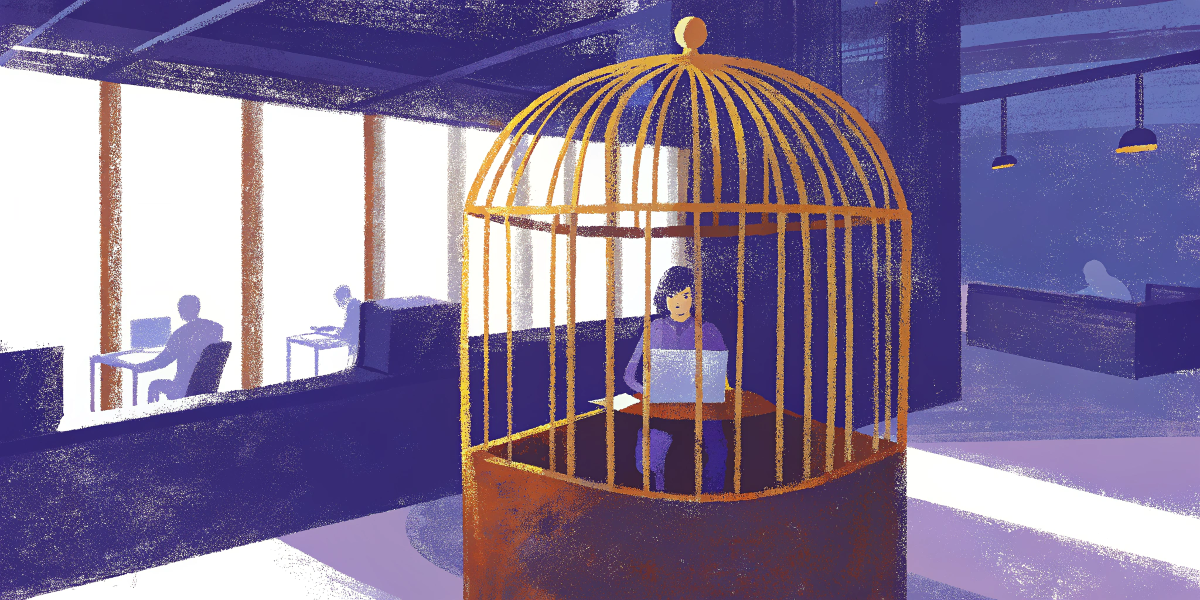
Just paying people isn’t enough anymore.
Naturally, pay is still critical — it’s the foundation we all require. But even the best paycheck can become meaningless when every workday merges into the last one. When progress stops and the future turns into a fog, motivation disappears.
People come to work for the paycheck. They stay for the purpose.
At the core of that purpose is a deep, human truth — the need to grow, to improve, and to be a component of something bigger than a job title. It’s the need to know their time and effort are heading somewhere meaningful.
But when that sense of progress disappears — when roles become routines repeated year after year — something quietly breaks inside. Confidence fades, energy drains, and even the most talented begin to wonder if they’ve outgrown the space they occupy.
Think of your employee as a bird in a cage that’s grown too small. First, they manage. Then they withdraw. Finally, they burn out or break out.
This is the silent crisis at the root of so many retention problems today. It’s not perks or promises that are the problem. It’s the absence of a clear, personal way forward.
Career development isn’t a perk. It’s a guarantee — a guarantee that says, “We see you where you are, and we believe in where you can go.”
In the pages ahead, we’ll explore why professional growth has become one of the most powerful retention strategies in the modern workplace. You’ll find practical, honest ways to build personalized career development programs that truly resonate with your people. Because in today’s talent market, investing in your employees’ growth isn’t optional — it’s essential.
After all, people don’t leave because things get hard.
They leave when they stop growing.
What career growth means to employees today
Career development is not an abstract principle or vague advantage. It is concrete, observable progress — learning new skills, overcoming major challenges, and moving along a clear path that aligns with personal and professional goals.
Employees today require more than a set of things to do. They require understanding how their work connects to their personal and career development. They seek experiences that allow them to learn new things and position themselves for their target next jobs.
This shift is especially potent with younger generations like Gen Z and millennials. They don’t always expect lifetime employment, but they do expect lifetime learning. They need visibility on where they can go and confidence that their organization is really invested in their growth.
Phenomena like the Great Resignation and quiet quitting reflect a more underlying truth: career development has become an unstoppable retention driver. Without career growth opportunities that matter, disengagement follows and attrition increases.
The challenge now is to break out of the straitjacket of one-size-fits-all training and craft customized, high-impact growth experiences — ones that actually resonate with people and allow them to envision a future they wish to remain a part of.
Growth builds loyalty — the real connection between development and staying power
People don’t quit companies. They quit feeling trapped.
When employees feel there’s a clear and reachable path ahead of them — and that someone’s in their corner in the process — loyalty is no longer forced; it springs naturally. Professional development stops being solely about learning new things and becomes a sign that the company actually believes in them and what they can do.
A culture of work that really is supportive of growth and wellness is a total game-changer. When people can stretch, learn, and bring their full selves to work, they feel more connected to the company.
Statistics bear it out. Companies that make internal career promotions transparent and accessible hold onto employees nearly two times longer than those that don’t. In fact, 94% of employees report they are more likely to stay with a company if it invests in their career development.
To sum it up, here are some essentials that tie career growth to why people stick around:
- Clear career roadmaps that show what’s possible and how to get there
- Ongoing learning opportunities that actually matter to the person
- Managers and leaders who invest time and energy in development
- A culture that values trying, failing, and learning, not just hitting targets
- Programs that make it easy to move around inside the company, sideways or up
When employees actually believe in a future here, with real chances to grow and learn, they stay charged, motivated, and in for the long haul. It’s not just about numbers of retention. It’s about creating an organization that hears, respects, and supports.
The war for talent today delivers this simple message: if you don’t invest in your people, somebody else will.
From Generic to Genuine: Building a Career Growth Strategy That Retains
Many career development programs miss the mark. They read generic, disconnected from what staff really want, or checklist-based rather than impact-based. For career advancement really to become an instrument of retention, it must be meticulously designed and profoundly personalized.
The first is to observe the signs before one of your workers checks out mentally or starts looking elsewhere. This is to listen for the subtle signs — shifts in attitude, dips in involvement, or lack of initiative suddenly. People who know their staff well can spot those early warning signs.
Training managers to see potential is crucial. It is not crystal balls or fairy dust but open, ongoing dialogue and actually listening to how employees grow, solve problems, and interact with others. Managers must learn to ask the right questions, listen intently, and connect everyday performance with possible futures.
Technology can assist. AI programs and analytics can spot risks or locate holes in skills, but never replace human judgment. Instead, they are an extra pair of eyes to allow managers to prioritize their focus where it is most important.
Recognizing the signs, training managers, and using the right tools is where it starts, but retention doesn’t happen by observation alone. It takes structure. Intention. A plan that people can believe in.
Let’s break it down.
How to retain talent through real career growth: A practical, honest guide
Let’s be real — career growth has shifted from being a nice bonus to becoming the glue that holds your best people in place. You can offer good salaries, flexible hours, even top-tier benefits, but if employees don’t see a future with you, they’ll eventually walk. And sometimes, they mentally check out long before they hand in a resignation letter.
Here’s how to rethink your approach and start building a career development strategy that actually works — for your people and your business.
Start by getting clear on where you are
Don’t guess. Don’t assume. Start with a hard look at your current landscape.
- Do employees know what career paths exist inside your company?
- Are your learning programs relevant or just sitting there untouched?
- Do people feel like they’re growing — or just surviving?
Before you launch another training initiative, find out what’s landing and what’s not. Talk to your people. Run a short survey or hold listening sessions. You’ll hear what’s really missing — and it often has less to do with content and more to do with direction.
What to do next: Audit your development offerings. Ask where people feel stuck. Map which roles have no clear “next step.” That’s your starting point.
Personalize growth — or risk losing attention
One of the biggest mistakes? Thinking everyone wants the same kind of progress.
Some people want to climb the ladder. Others want to deepen expertise, change tracks, or just have more autonomy in what they do. Career growth isn’t linear anymore — and your approach shouldn’t be either.
What to do next:
- Stop using the same templates for everyone.
- Segment your people by career stage, not just job title.
- Build development plans with the person, not just for them.
When employees feel seen for who they are and where they want to go, they’re far more likely to stay and invest their energy in the work.
Show them what’s possible — and how to get there
The silence around “what’s next” is where motivation dies. Even your most driven team members can burn out or drift away if the path forward is murky.
Don’t let growth be a guessing game. Make career paths visible. Outline what advancement looks like — and not just vertically. Show lateral moves, project rotations, mentoring routes.
What to do next:
- Create simple, visual maps for progression.
- Be transparent about requirements for internal moves.
- Encourage managers to have ongoing career conversations, not just annual check-ins.
When people know what’s ahead and believe it’s real, they’ll stay to pursue it.
Keep growth alive between promotions
Not every person will be promoted next quarter — and they shouldn’t have to be. But that doesn’t mean they can’t grow.
Career development isn’t a big leap. It’s dozens of small moments that build momentum: leading a project, shadowing a peer, joining a cross-functional team.
What to do next:
- Give people access to challenges, not just courses.
- Build learning into real work.
- Make sure your managers know how to spot — and create — those opportunities.
Train managers to spot potential and spark growth
Most employees don’t leave because of one bad day — they leave because no one saw what they were capable of. Managers are often the first (and only) line of sight. But if they’re not equipped to coach and support development, you’re flying blind.
What to do next:
- Teach managers to listen for growth signals.
- Give them tools for career conversations, not just performance reviews.
- Recognize and reward the managers who actively grow their teams — not just hit targets.
Great managers grow great people. It’s that simple — and that hard.
Stop measuring the wrong things
Tracking how many people took a course won’t tell you if they feel like they’re progressing. By the time someone resigns, the opportunity to re-engage is gone.
What to do next:
- Measure clarity around growth, not just training participation.
- Include development in engagement surveys — and act on the results.
- Look at internal mobility: Are people moving, evolving, re-skilling? If not, why?
Data is only helpful if it tells you something you didn’t already know.
The biggest shift HR and leadership teams can make right now is to stop treating career growth like a benefit — and start treating it like a responsibility.
Because when employees feel like their future is visible, supported, and valued, they stay. They engage. They stretch. They build things with you instead of looking elsewhere.
And that’s not just how you keep people. That’s how you build the kind of workplace they want to grow old in.
Growth is the new glue
Retention has never been about locking people in place. It’s about building something they want to be part of. A space where they see themselves learning, evolving, and moving forward — not just working to stay afloat.
Career development isn’t a bonus you hold out in job postings. It’s a long-term commitment. A quiet but powerful message that says: We see you here. We believe in your future. Let’s shape it together.
That is the shift HR and leadership teams are being challenged to make — to stop viewing growth as a privilege and start seeing it as a shared responsibility. Because when people sense that their goals can be realized here, when they can envision a way that respects both who they are and who they can become, they stay. They commit. They grow roots.
Employees today aren’t just looking for titles or training budgets. They’re looking for alignment — between their values and yours, between their personal journey and your company’s mission. When that alignment exists, it becomes something bigger than loyalty. It becomes a sense of belonging and purpose.
If people feel invisible, trapped, and burned out, they will leave — regardless of what is provided in the way of competitiveness. But if people feel visible, challenged, and cared for, they’ll stay even when uncertainty looms. Not out of obligation, but because they genuinely want to build something with you.
And here’s the truth: your people are your greatest asset. They are the living force behind your culture, your ideas, your growth. They don’t just pay the bills. They drive the vision forward. So invest in them — water the roots, fan the promise, and have faith they’ll pay the investment back with devotion, imagination, and power.
Because people stay where they can grow.
And growth, above all else, is what holds it together.

Payroll Is Culture Too: Why Timely Pay and Employee Experience are Inseparable

Employee Experience Meaning: What It Really Is – and Why It Decides Your Company’s Future

What Is Favoritism At Work and How to Deal With It?

9 Tips to Adapt Collaborative Work for Remote Employees

12 Superb Team-Building Games and Activities You Won’t be Ashamed of
-

 Collaboration9 months ago
18 Experts Share Tips for Businesses Switching to Remote Work
-
 Communication12 months ago
6 Communication Plan Templates With Examples
-
 Collaboration11 months ago
30 Work From Home Memes: Funny Work Memes to Make You Laugh
-
 Collaboration12 months ago
6 Tips for Lifting the Burden of Too Many Responsibilities
-

 Productivity11 months ago
Super True Mental Health Memes You’ll Probably Relate To
-
 Collaboration1 year ago
35+ Collaboration Quotes to Celebrate Teamwork
-
 Collaboration12 months ago
7 Easy Strategies for Effective Team Communication
-

 Collaboration11 months ago
Top 6 Financial Tips Every SaaS Founder Should Know