
Organizational Culture
When Your Culture Conflicts With Your Policies


Your policies look like a shining dream. Your actual culture feels like a branch of corporate hell – messy, misaligned, and stressful. That gap between what’s written and what actually happens is the reality of culture vs policy conflict in many organizations. It drives employees to frustration, exposes compliance risks, and erodes the trust that holds your organization together.
And it’s not just perception. Only 18% of employees feel that their organization’s stated values or external image align with the culture they experience every day. A quarter believe their leaders’ behavior does not reflect the values portrayed externally. These numbers show that the policy and culture misalignment is real, widespread, and costly.
Recognizing these gaps is one thing. Knowing how to act on them is another. This guide tackles both. You’ll learn how to:
- Spot culture-policy gaps before they become crises
- Bridge misalignment with practical, actionable steps
- Build policies that reflect the way work actually gets done
By the end, you’ll have a roadmap for turning friction into trust, compliance, and engagement – even when reality clashes with the ideal on paper.
What do we mean by “Policy” and “Culture”?
Policies and culture shape each other, but they are not the same. Policies reflect intention. Culture reflects reality. Understanding both is the first step to closing the gap.
Q: What is an organizational (or corporate) policy?
A set of formal rules, guidelines, or procedures created by leadership to regulate behavior, ensure compliance, and align decisions with legal and business requirements. Policies are usually documented, communicated, and enforced.
Q: What is organizational culture?
The shared values, beliefs, attitudes, and everyday behaviors that define “how we do things here.” Culture is lived and experienced – shaped by people’s interactions, traditions, and informal habits rather than just formal rules.
The easiest way to remember it:
- Policy is what’s written down.
- Culture is what actually happens.
- If they match → trust and clarity.
- If they clash → confusion, frustration, and high turnover.
Policy vs. Culture – key differences at a glance
| What We’re Talking About | Policy – The Official Story | Culture – The Real Story |
|---|---|---|
| Nature | The polished PDF in your onboarding folder. The thing HR can point to and say, “See? It’s in writing.” | The vibe you get on your first day. How people actually behave, not what’s on paper. |
| Who creates it | HR, Legal, and leadership sit down to make sure it’s fair, clear, and legally safe. | Everyone, every day – through habits, unspoken rules, and what’s rewarded or ignored. |
| Where you see it | On the company website, in the employee handbook, pinned in the HR office. | In Slack messages, hallway chats, who gets praised, and how managers react when things go wrong. |
| Why it exists | To set boundaries, keep the company compliant, and make expectations clear. | To give people a sense of “this is how we do things around here” – whether it’s friendly or cutthroat. |
| Work hours | “We work 40 hours. Overtime is rare and paid when approved.” | The unspoken rule: If you’re the first to leave, people notice. Late-night emails earn gold stars. |
| Diversity | “We welcome and respect everyone equally.” | All leadership looks the same. Jokes at someone’s expense slide by without comment. |
| Communication | “Our open-door policy means you can speak up freely.” | You can speak up… once. After that, projects mysteriously get reassigned. |
| Flexibility | “Two remote days per week, just check with your manager.” | Technically allowed – but your boss sighs every time you ask. |
| Social events | “Team-building activities are optional.” | Skip the happy hour, and next week you’re “out of the loop” on decisions. |
Quick reality check for HR and leadership:
Employees judge your company by its culture, not its policies. In the policy vs culture dynamic, culture wins every time. If your policy shines but the culture tells another story, the real danger is a gap so wide your policies start to feel like satire.
Understanding these differences is one thing. The next challenge is spotting gaps between policy and culture before they become crises, and that’s what the following section covers.
Recognizing the signs – Culture vs. Policy misalignment
How do you know your culture and policies don’t align? Watch for these warning signs:
- Rules being skirted or workarounds: Employees covertly circumvent the rules. The policy manual may not allow sending sensitive information through personal email, but some still send files via Gmail because the official secure alternative is clunky or slow.
- Inconsistent leadership behavior: Managers act differently. One protects work-life balance, getting people out the door on time and avoiding burnout. Another requires near 24/7 availability. When these teams overlap, tension spills over, and employees start to whisper about equity, or a lack thereof. Suddenly, the “rules” become personal, not universal.
- Policy enforcement gaps: Policies exist, but no one enforces them. Mandatory data procedures skirted, or expense rules stretched to the limit for favorites.
- Diversity and inclusion vs. leadership practice: Policies may be stated to be supportive of equality, but leadership remains in the hands of the same types of people, and microaggressions are sanctioned. Staff see the gap between what’s said and what happens.
- Erosion of trust: People feel rules are being imposed, not co-created. A work-from-home policy is technically permissive of flexibility, but when the leaders of work audibly sigh each time someone works from home, employees quickly learn what’s really okay.
Quick сhecklist for HR Leadership
- Are unwritten behaviors breaking written policies?
- Do employees understand why policies are required, aside from the handbook?
- Is leadership consistent, or do loopholes go unnoticed?
- Are workarounds becoming the norm instead of being corrected?
Spot these warning signs early, and you can step in before misalignment becomes disengagement, turnover, or a full-blown culture headache.
Bridging the gap – down-to-earth steps to align policy and culture
Closing the gap isn’t stricter enforcement – it’s practical action, understanding, communication.
1. Observe and iterate
Walk the floor. Sit in on calls. Notice where the way people actually work clashes with what’s written down – work hours, communication habits, decision-making styles.
Culture isn’t static, and neither should your policies be. Keep watching, keep listening, and keep adjusting before friction becomes fracture.
2. Engage leadership
Get managers on the same page about both the intent and the lived reality of policies.
Show them clear examples of inconsistencies.
Leaders should be the first to live the behaviors you expect others to follow.
3. Involve employees
Run surveys, focus groups, or informal chats.
When people help shape the rules, they don’t just follow them – they own them.
4. Update policies where needed
Cut outdated or unrealistic rules. Policies should work with your culture, not against it.
When you make changes, explain the why. Transparency builds trust faster than any handbook.
5. Reinforce Through Communication
Spot and celebrate teams who live both the letter and the spirit of the rules.
Be consistent in messaging – if expectations change, everyone should hear it the same way.
Reality check: Closing the gap isn’t easy. Policies and culture must evolve together. When done well, employees think your words and actions are in sync, and that trust fuels engagement, retention, and performance.
Reflection and next steps
Closing the gap between policy and culture is not about making rules more enforced – it’s about creating alignment that works in the real world. For HR leaders, legal teams, and founders, alignment is crucial. It’s the distinction between engaged employees who trust the company and a workforce that secretly resists, disengages, or leaves.
Consider this: policies are your promise. Culture is the delivery. When they match, trust flourishes, compliance strengthens, and engagement thrives. When they don’t, even good rules feel like bad jokes.
Core actions for reflective HR leadership:
- Be an observant caretaker: have close eyes on behaviors and take early warning signs.
- Enlist leaders: get managers to demonstrate the behaviors the organization wants.
Listen to employees: co-created policy is more likely to be honored. - Act intentionally: revise rules, clarify expectations, communicate.
- Build feedback loops: watch alignment frequently and adjust before friction sets in.
Trust is fragile. But when culture and policy reinforce each other, your values stop being words on a wall – they become the way work gets done.

Every year, organizations launch culture change programs with genuine conviction. Leadership teams commission surveys, hire consultants, and roll out frameworks. HR drafts values statements. Town halls are scheduled. Slide decks are made. And then, slowly, quietly, nothing changes. Or worse, things deteriorate further.
The failure isn’t usually a story about cynical leaders going through the motions. Culture is the accumulated residue of what the organization has tolerated, rewarded, ignored, and punished – over years, sometimes decades. Most leaders launching culture programs genuinely believe in them. The problem is structural, not motivational. And understanding it requires looking at what employees actually experience when a new initiative lands – and what they remember.
Culture change initiatives fail for one core reason: organizations treat culture as a messaging problem and solve for visibility rather than behavior. They launch programs instead of making decisions, communicate values instead of demonstrating them, and measure participation instead of trust. The result is a cycle of initiative and inaction that erodes employee engagement faster than any of the original problems did – because it adds broken promises to whatever dysfunction already existed.
The cycle that almost every company repeats
The recognition that something is wrong with workplace culture typically arrives through a trigger: an employee engagement survey with alarming scores, a spike in voluntary turnover, a harassment complaint that makes it to senior leadership, a Glassdoor review that goes semi-viral internally, or simply a moment where a leader looks around a room and realizes no one is saying what they actually think.
The organizational response tends to follow a familiar sequence.
First comes diagnosis. More surveys. Focus groups. External consultants brought in to name the problem with enough distance to make it palatable. This phase often produces a report with recommendations that everyone agrees are correct and almost no one acts on.
Then comes the initiative phase. A cascade of programs arrives simultaneously:
- A new set of company values
- Leadership training on psychological safety
- Mandatory unconscious bias workshops
- A revamped performance review process
- An employee resource group strategy
- A new internal communications channel
- A recognition and rewards platform
Sometimes all of these arrive within the same six-month window, each announced with genuine enthusiasm, each saturating internal messaging with the language of culture.
And then employees watch. They watch carefully. They compare what they’re being told to what they’ve seen before.
What employees actually do when a new initiative lands
Before diagnosing why culture programs fail structurally, it helps to understand the mechanism by which they fail in practice. That mechanism is organizational memory.
Organizational memory is the collective record of what an organization has promised, delivered, avoided, and punished – stored not in documents but in the lived experience of the people who were there. Every new initiative is interpreted through this record, automatically and involuntarily.
When a new culture initiative lands, employees don’t evaluate it in isolation. They run it through everything the organization has already taught them about how it behaves under pressure. This process is rarely deliberate – it’s pattern recognition built from direct experience. Here is what it looks like across five common situations:
- The transparency initiative. Employees hear the announcement and cross-reference it against the restructuring from eighteen months ago – the one that came with no explanation, where a team disappeared overnight, and nobody ever said why. The new initiative doesn’t erase that memory. It’s evaluated against it.
- The feedback culture program. Workshops launch on giving and receiving honest feedback. Employees recall what happened the last time someone gave honest upward feedback: they were quietly moved to a less visible project, their next review came back oddly flat, or they left within six months.
- The psychological safety commitment. A senior leader delivers a compelling address on the importance of speaking up. In the audience are people who watched a colleague raise a process concern six months ago and get sidelined for it. They are running a quiet probability calculation about whether this time is different. The address cannot answer that question. Only time and behavior can.
- The new values framework. Five carefully chosen words are unveiled. Employees immediately map them against the manager who would score zero on at least three of them – and who was promoted last quarter. The values are noted. The promotion is not forgotten.
- The listening sessions. Leadership schedules open forums to hear directly from employees. People who attended the last round – two years ago – remember that themes were documented, a summary was circulated, and nothing changed. Attendance at the new sessions is polite, guarded, and not quite honest.
The pattern across all five is the same: employees are intelligent observers with long memories. Unresolved problems don’t disappear when a new program arrives – they become counterevidence that the program must somehow overcome. Most programs don’t try. They proceed as though the history doesn’t exist.
Organizational memory isn’t stored in documents. It lives in stories that circulate through teams, in the daily experience of working under specific managers, and in something less visible but more persistent: the tension of returning to a workplace where certain things were never resolved. New initiatives don’t overwrite that memory. They are filtered through it – and often weakened by it before they even begin.
Why culture initiatives fail at the root
Understanding the organizational memory mechanism makes the structural failure easier to name. Most culture programs are built on a category error.
Organizational culture is defined by what people actually experience – by who gets promoted and why, by what behavior gets rewarded when it conflicts with stated values, by what happens when someone raises a difficult issue, and by whether the organization does anything costly when doing so is the right thing.
When a culture program operates entirely at the level of language – new values, new slogans, new meeting rituals – without touching any of these underlying structures, employees don’t experience culture change. They experience rebranding. The visible/embedded gap is the distance between what an organization displays publicly and what it actually changes structurally, and most culture programs live almost entirely on the visible side of it:
- A new values framework is visible. Changing the criteria by which people are actually promoted is embedded.
- Launching a wellbeing program is visible. Redesigning workload distribution so that wellbeing programs aren’t needed is embedded.
- A leadership communication campaign is visible. Holding a senior leader accountable for behavior that contradicts stated values is embedded.
Organizations systematically overinvest in the visible because it produces signals that can be reported. The embedded produces changes that are harder to control, slower to claim credit for, and more likely to cost someone something real. That cost is exactly what makes it credible.
The danger of delayed culture repair
Organizational culture doesn’t collapse overnight. It decays through a series of small decisions that each seemed manageable in isolation: the feedback that went unaddressed, the promotion that sent the wrong signal, the concern that was heard and quietly filed. Each one is survivable. Accumulated over months and years, they become the culture.
By the time leadership notices – through survey scores, attrition patterns, a visible drop in energy across teams – the decay has been underway for a long time. What registers as a sudden problem is almost always the moment the accumulated weight finally breaks through to the surface.
The response that follows tends to be proportionate to the urgency leadership now feels, rather than to what employees can absorb. The organization, which spent years moving slowly toward dysfunction, suddenly attempts to move very fast away from it. The employees receiving that urgency, however, are depleted. Some have already mentally left – still present, still performing, but no longer available for the kind of investment that culture repair requires. The most resilient are watching carefully, doing the math on whether this moment is different from the last one. The least resilient are already updating their CVs.
The brutal arithmetic of culture repair: organizations typically allow years of gradual decline before acting, and then expect to reverse the damage in a quarter. Trust erodes slowly and rebuilds on the same timeline. Real repair – the kind that changes what employees believe about the organization, not just what they say in surveys – cannot be rushed.
Why early action matters
Most organizations never seriously consider acting before a crisis makes action unavoidable. But early problems are far cheaper to resolve:
- A team beginning to disengage can still be reached
- A manager whose behavior is starting to erode trust can be addressed at relatively low organizational cost
- An inequity quietly building can be corrected before it becomes a structural grievance
- The window for proportionate action is still open
By the time a formal culture program launches, many of those windows are already closed. If you’re a leader thinking we should probably do something about culture – not because there’s a crisis, but because you’ve noticed early signs – you are in the best position you will ever be in to act. The work is proportionate now. Wait until it becomes undeniable, and the work will need to be proportionate to how long you waited.
The ash of burned-out employees is not a metaphor. By the time leadership finally responds, the question is no longer how to prevent the fire, but whether enough trust remains to rebuild from what it left behind.
The trap of initiative overload
There is a well-documented problem in change management called initiative fatigue. When employees are asked to absorb multiple simultaneous culture programs – each with its own vocabulary, training requirements, and behavioral asks – the cognitive and emotional load becomes unsustainable. The result is not engagement. It’s a cascade effect in which each additional initiative weakens the credibility of the next. When everything is a priority, nothing is.
There is a second, less visible consequence. Each new initiative resets attention away from unresolved problems. A leadership program launches, and focus shifts to the program itself – not the manager who consistently drove people out, not the team that was chronically under-resourced, not the feedback that was acknowledged and never acted on. Those problems don’t disappear. They are temporarily displaced. The initiative becomes a form of institutional forgetting presented as progress.
Over time, employees stop reading the pattern as commitment and start reading it as avoidance – a way for leadership to generate activity instead of making difficult decisions. Employee trust doesn’t accumulate through programs. It accumulates through patterns. And when initiatives stack up without resolution, the pattern is legible: this organization responds to discomfort by producing new language, not new behavior.
Initiatives fail when leadership behavior stays the same
The central structural failure of most culture programs is also the most consistently avoided one.
Organizations invest heavily in training and programs aimed at employees and middle managers while leaving senior leadership behavior substantially intact. Senior leaders receive feedback through processes sufficiently insulated from accountability that the feedback rarely produces real change. They endorse the culture initiative publicly and return to operating in ways that contradict it.
Employees observe this with precision. Leadership communication that espouses openness and trust while leadership behavior remains closed and fear-producing doesn’t create confusion – it creates clarity. The behavior is the message. The communication is in context.
A senior leader who publicly champions psychological safety and then visibly punishes a direct report for raising a concern hasn’t made a mistake correctable with better messaging. They have broadcast the actual operating norm to everyone who witnessed it – and in most organizations, that kind of story moves fast and stays long.
Genuine culture change requires that leaders submit to the same standards they’re asking of everyone else:
- Their behavior must have visible consequences when it contradicts stated values
- The feedback they receive must be honest and must be seen to matter
- Honesty directed upward must be rewarded, not quietly penalized
- The performance management system must apply to them
Most culture programs don’t require this because requiring it is genuinely difficult and carries real costs for the people who control the program’s resources. It also happens to be the single change that would do more for employee trust than any collection of initiatives combined.
Emotional labor without structural change
Employee engagement programs that ask people to bring their whole selves to work, to name what they need, to trust the process – while the actual structures of power and accountability remain unchanged – are asking employees to absorb risk on behalf of the organization. They are asking people to behave as though the culture has already changed, in order to provide the raw material the organization needs to claim that it has.
Employees who have lived inside a toxic work culture develop finely calibrated systems for protecting themselves within it. Those systems are adaptive, not irrational. An initiative that asks them to dismantle those defenses – in exchange for a promise of safety that the organization’s history doesn’t yet support – is asking for a vulnerability it hasn’t earned.
Consider what that request looks like from the inside: you are being asked to open up in an environment where openness has historically been costly, by an organization that has not yet demonstrated it has changed the conditions that made it costly. The initiative is real. The risk calculation is also real.
When the initiative doesn’t deliver, the result is a deeper erosion of employee trust than existed before it began. The organization borrowed goodwill it couldn’t repay.
Culture repair starts with subtraction
In organizations where initiative fatigue has already taken hold, more programs don’t signal seriousness. They signal that leadership doesn’t understand the problem it’s trying to solve.
The antidote to organizational disbelief is demonstrated willingness to do something that costs something. Culture repair with significant accumulated damage typically requires a period of reduction before a period of addition: stopping the generation of new programs and returning instead to the unresolved problems that created the disbelief in the first place. Naming what happened – specifically, not in the abstract. Making visible what the organization intends to do differently.
This is harder than launching a new program. It involves accountability that has a face. It involves acknowledging that something went wrong and that the organization was party to it. It cannot be workshopped away or branded.
One meaningful decision – a structural change, a real accountability action, a genuine revision of the conditions that produced the problem – is worth more in terms of cultural repair than a year of programming. Fewer initiatives, executed with integrity, do more for organizational culture than many initiatives executed with polish.
Employees need proof, not promises
The question employees are asking – implicitly, constantly – is not what is this organization saying it values? It is what is this organization willing to sacrifice for what it says it values?
The answer arrives not in a communications plan but in moments when values and cost collide, and the organization chooses values:
- When a high-performing leader is held accountable for behavior that contradicts stated culture
- When a structural injustice quietly known for years is finally, visibly corrected
- When the organization doesn’t promote the person who was brilliant and harmful
- When it publicly returns to an old wound and does something about it
These moments are the actual substance of culture change. Everything else is context.
Employees don’t need to be inspired – they have been inspired, repeatedly. They don’t need to be told that culture matters; they know it matters more acutely than most leaders do, because they live inside it. What they need is evidence that the organization has changed its relationship to difficulty. That it can do the hard thing, not just describe the hard thing.
When that evidence arrives – one real moment, unmistakable and costly – it does more for employee trust than any number of initiatives. Because it isn’t a promise. It’s proof.
What actually works
There is no clean framework for culture repair, and organizations should be suspicious of any consultant who offers one. But the patterns that distinguish genuine culture change from performative programming are consistent enough to name.
- Name the specific problem, not the general one. Say “people have told us they don’t feel safe raising concerns to their managers, and we know why some of them don’t” – not “we have an opportunity to improve psychological safety.”
- Connect new commitments to old ones. Before launching anything new, return to what was previously committed. What happened with it? What changed, and what didn’t? Why? This is uncomfortable, and it is the only way to break the disbelief cycle.
- Make leadership behavior the primary metric. Culture change that doesn’t hold leaders accountable for behavior – specifically the behavior that contradicts stated values – is measuring the wrong thing entirely.
- Do one difficult thing visibly. Identify something the organization has avoided because it was costly, and do it. The specific action matters less than its quality: that it was real, that it was hard, and that employees could see the organization choosing it anyway.
- Reduce the initiative load before adding to it. Let some things end. Let some programs expire without replacement. The discipline to stop as well as to start is itself a form of credibility.
- Measure culture by what it costs to behave consistently with it – not by survey scores or participation rates, but by whether the organization’s decisions, over time, track with its stated values even when they don’t have to.
The organizations that genuinely change their cultures don’t do so by finding the right program. They develop the institutional honesty to look clearly at what their culture actually is, the willingness to hold leaders to account for the gap between stated and actual, and the patience to let structural change accumulate into cultural change over time. That is slower than a launch event, harder to brand, and considerably more durable.
FAQ
Why do culture change initiatives fail?
Most culture change initiatives fail because organizations try to change perception before changing experience. New values, workshops, and communication campaigns are introduced while the underlying systems that shape employee reality remain intact. Employees evaluate every initiative against what the organization has historically rewarded, ignored, or tolerated. When behavior and accountability stay the same, the initiative is experienced as messaging rather than change.
Why do employees resist culture change programs?
Employees are often described as resistant to change when what they are actually responding to is organizational inconsistency. Many have seen previous initiatives arrive with strong language and weak follow-through. Over time, employees learn to protect themselves from disappointment by withholding trust until they see evidence that leadership behavior, incentives, and accountability structures have genuinely changed.
What is initiative fatigue in organizations?
Initiative fatigue occurs when employees are asked to absorb repeated waves of programs, trainings, and behavioral expectations without seeing meaningful resolution of underlying problems. Each additional initiative increases cognitive and emotional load while weakening credibility. Employees begin to interpret constant new programming not as progress, but as avoidance of more difficult structural decisions.
How long does culture change take?
Meaningful culture change often takes years rather than quarters. Trust deteriorates gradually through accumulated experiences, and it rebuilds through the same mechanism. Organizations frequently underestimate how long employees have been adapting to dysfunction and overestimate how quickly new initiatives can reverse those adaptations.
What is the difference between performative and genuine culture change?
Performative culture change focuses primarily on visible signals: values statements, campaigns, workshops, branding, and communication. Genuine culture change alters the embedded structures that shape employee experience, including accountability, leadership behavior, incentives, workload distribution, promotion criteria, and decision-making norms. Employees recognize the difference quickly because they live inside the consequences of both.
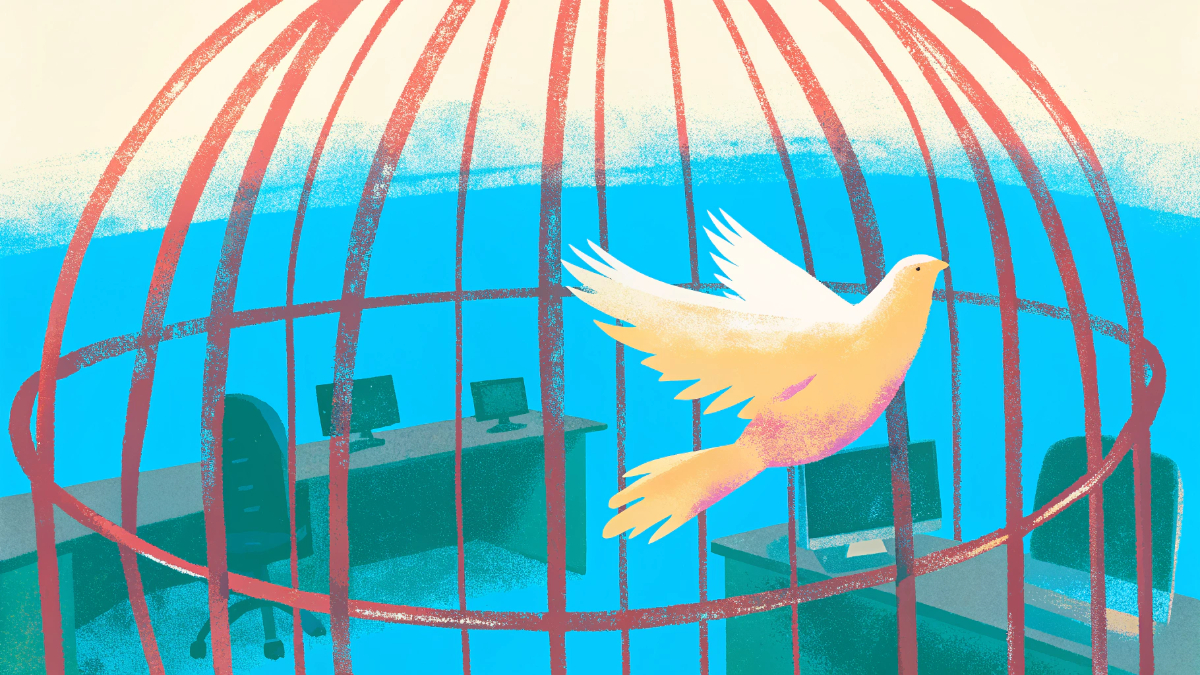
What if the most accurate diagnostic tool for organizational health isn’t a survey, a dashboard, or a consultant’s framework – but simply watching who leaves first?
There’s a pattern that plays out with quiet consistency across industries, company sizes, and market conditions. When a culture begins to corrode, it doesn’t lose people randomly. It loses them in a specific order.
The ones with the most options: the clearest judgment, the strongest track records, the most portable skills – start disappearing first. The ones who haven’t yet built alternatives, or haven’t yet noticed what the sharper eyes have already registered, stay longer.
By the time leadership identifies a retention problem, the most consequential departures have already happened.
The canary leaving first is not a coincidence. It’s a signal.
Who high performers actually are
Before we talk about why high performers leave culture-debt organizations first, we need to define what “high performer” actually means, because most companies mistake output for value.
A high performer isn’t simply someone who hits their numbers. A high performer is an employee whose absence makes the organization structurally weaker, not just temporarily short-staffed.
They tend to:
- carry disproportionate institutional knowledge
- raise the performance ceiling of those around them
- produce work that compounds beyond their tenure
- influence decisions beyond their formal role
The performance gap is wider than most organizations assume. McKinsey research on complex knowledge-work roles finds that top performers deliver up to 800% more productivity than average employees in highly specialized functions — and even in broader knowledge-work settings, the gap holds at around 400%. This isn’t a marginal advantage. It’s a categorical difference in what gets built, decided, and moved forward.
What makes them genuinely hard to replace isn’t their output. It’s their judgment – the accumulated ability to recognize what matters, what’s broken, and what’s possible that developed over time and can’t be documented in an offboarding call.
High performers as environmental sensors
But there’s a quality that rarely makes it into the performance review: high performers are extraordinary readers of environments.
Like certain animals that detect atmospheric or seismic shifts long before any instrument records them, high performers detect organizational dysfunction early.
They pick up subtle but consistent patterns in the employee experience:
- initiative that is praised in meetings but quietly abandoned later
- inconsistent patterns of credit allocation
- leaders who encourage candor but punish it in practice
- misalignment between stated values and actual decisions
To most employees, these are background noise. To a high performer, they are signals forming a system model that they are constantly updating.
This is why they leave first. And why, by the time their resignation lands, the warning signs were never truly hidden, only ignored.
How cultural debt accumulates inside organizations
Culture debt is the organizational equivalent of technical debt. It builds up quietly, compounds over time, and becomes dramatically more expensive to address the longer it goes unacknowledged.
Technical debt happens when teams take shortcuts, shipping fast, skipping documentation, patching instead of rebuilding, because pressure to deliver outweighs discipline. The code works, until it doesn’t. And when it breaks, fixing it becomes far more expensive than doing it correctly in the first place.
Culture debt works the same way. It accumulates through small, repeated decisions:
- promoting managers who undermine their teams because addressing it is uncomfortable
- allowing credit to flow upward and blame to flow downward to avoid conflict with leadership
- tolerating performative alignment, everyone nodding in meetings while no one raises the real issue
- ignoring broken processes because fixing them is politically difficult
None of these is catastrophic on its own. Together, they compound into a system where work becomes progressively harder for the most capable employees. High performers pay the highest cost because they engage the system more deeply.
The typical culture debt cycle: Leadership avoids difficult decisions → Dysfunction becomes normalized → Initiative is quietly discouraged → High performers disengage → Psychological exit happens first → Physical resignation follows
Why high-performers detect dysfunction earlier?
The same traits that make someone a high performer also make them faster at reading organizational reality.
- They have stronger cognitive pattern recognition. When a decision contradicts stated values, they notice it. When it happens again, they connect the pattern. By the third time, they have built a model of how the organization actually works, distinct from how it claims to work, and they update it continuously.
- They also have more context. High performers often work across teams, have visibility into senior decisions, and are trusted with information that doesn’t reach everyone. This gives them a clearer view of contradictions between leadership narratives and operational reality.
- Finally, they have a lower tolerance for misalignment between stated and actual values, not because they are idealistic, but because they are strategic. They understand that dysfunction is not just unpleasant. It is expensive. It slows decisions, obscures accountability, and makes meaningful work harder.
When the culture debt gets heavy enough, high performers don’t get angry. They get quiet. And then they start looking elsewhere.
Why high performers experience misalignment faster
High performers don’t just detect dysfunction earlier; they feel the cost of it faster.
When someone is performing at a high level, taking ownership of complex problems, driving initiatives, influencing decisions – they are by definition more exposed to the organizational environment. They interact with more stakeholders, depend on more systems functioning correctly, and invest more of themselves in outcomes.
This means that culture debt hits them harder.
A broken approval process is a minor inconvenience for routine work. For a high performer trying to move something meaningful forward, it becomes a structural blocker. A vague accountability system is tolerable when outcomes are easy to attribute. It becomes infuriating when you deliver results and see them reassigned elsewhere.
The employee who keeps their head down, executes their function, and avoids organizational complexity can work in a culture-debt environment for years without registering it as a serious problem. The high performer trying to actually build something hits the debt ceiling within months.
Culture debt punishes initiative first
This is the mechanism that makes culture debt particularly self-destructive: it doesn’t punish passivity. It punishes initiative.
In a healthy organization, taking initiative is rewarded. You identify a problem, you propose a solution, you take ownership, you’re recognized.
In a culture-debt organization, the same sequence plays out differently. You identify a problem, you propose a solution, and then: the idea gets stalled in a committee that never decides anything; someone more senior absorbs your framing and presents it as their own; or you’re quietly marked as a troublemaker for naming something the organization preferred to leave unnamed.
High performers take more initiative than average. Which means they get punished by culture debt more often, more visibly, and more directly.
After enough cycles, they draw the obvious conclusion: initiative here is not an asset. It’s a liability.
Once a high performer reaches that conclusion, the clock has started. They’re not gone yet, but they’ve begun the cognitive transition from “this is my work” to “this is a job I have while I look for something better.”
Why talented employees stop speaking honestly
There’s a quieter signal that precedes every high performer resignation, and most managers miss it: the shift from candor to compliance.
Candor phase
Early on, high performers tend to be generative in meetings. They push back, propose alternatives, and name uncomfortable truths. This is not personality. It is confidence that the environment responds to input. It is an investment signal.
They are contributing intellectual capital because they believe it will be used.
Compliance phase
When cultural debt accumulates to a certain point, that investment stops making sense.
Not because the person has become cynical – though sometimes they have – but because they’ve updated their model. They’ve seen what happens when you name the problem: nothing changes, or it changes against you. So they stop naming it.
The manager experiences this as the employee “maturing” or “becoming more collaborative.” What’s actually happening is the employee is reducing their exposure. They’ve begun the process of psychologically decoupling from the organization.
Gallup’s research on quiet quitting finds that most employees who are not engaged or actively disengaged are already looking for another job – meaning that by the time behavior visibly changes, the internal decision is often already made. The resignation letter is paperwork for a departure that happened in the mind months earlier.
Silence is often the final stage of disengagement.
Candor requires investment. When it stops, the investment is already there.
The mistake companies make after losing top talent
When a high performer leaves, the typical organizational response moves through a predictable and counterproductive sequence.
First comes surprise, because the signals were there but not legible to the people who needed to read them. Then scramble – a counteroffer, an attempt to identify what it would take to retain them, conversations that probably should have happened a year earlier. Then, when the person leaves anyway, a retrospective that focuses on compensation, because compensation is concrete and measurable, and because it redirects attention away from the structural issues.
The narrative becomes: “They left for a better offer.”
Sometimes that is technically true. But it avoids the real question.
Why were they open to other offers in the first place?
People who are fulfilled, challenged, and recognized in a culture they trust are not browsing LinkedIn. They get recruited and say no, or don’t respond at all. The high performer who leaves for a better offer was already gone before the recruiter called. The offer was the exit, not the cause.
What culture-debt companies consistently fail to do after losing top talent is look upstream. They ask what the competitor offered. They don’t ask what the organization failed to provide.
This is how the debt compounds. The departure is misread, the root cause remains, and the next high performer starts running the same calculation six months later.
How to stop selective attrition
If culture debt drives selective attrition, and it does, then addressing it requires treating culture as an asset with a balance sheet, not a feeling to be managed.
1. Read signals before they become resignations.
High performers signal disengagement through reduced initiative and decreased candor long before they hand in notice. Building feedback mechanisms that are genuinely anonymous, genuinely safe, and genuinely acted upon gives organizations a chance to read those signals. This means more than engagement surveys. It means leaders who have the credibility and the willingness to hear hard things.
2. Make cultural debt visible
Culture debt is often invisible to leadership because the people most affected are managing upward carefully. Connecting attrition data to performance tier data, tracking time-to-productivity for replacements of departed high performers, and calculating the real cost of a high-performer exit – including lost institutional knowledge, team disruption, and replacement costs that routinely run 50–200% of annual salary – makes the debt legible in the language leadership responds to.
3. Protect initiative
If the culture punishes people for naming problems or driving change, the explicit, visible protection of initiative is the first structural fix. This means leaders publicly crediting the people who raise uncomfortable truths. It means creating conditions where a failed experiment is treated as data, not as grounds for marginalization.
4. Fix specific failures, not the general culture
“We need a better culture” is a statement with no actionable content. The culture debts that drive high performers out are usually specific and identifiable: a particular manager whose behavior is tolerated, a decision-making process that creates learned helplessness, a pattern of credit flowing away from the people who earned it. Address those specifically, and the cultural improvement follows.
The broader truth is this: culture debt is accumulated by avoiding difficult decisions, and it can only be paid down by making them.
High performers know the difference between an organization that’s willing to do that and one that isn’t. They always know earlier than everyone else. And when the debt gets heavy enough, they leave – not for more money, not because they weren’t loyal, but because they’ve done the calculation and seen the answer clearly.
The question for every leadership team is whether they want to see it too, or whether they’d rather find out from the exit interview.
FAQ
Quick answers to the most common questions on this topic:
Why do high performers leave companies first?
High performers are more sensitive to organizational dysfunction because they operate closer to core systems and decision-making. They also have more external opportunities, which lowers the friction of leaving when the environment becomes misaligned or inefficient.
What is culture debt in an organization?
Culture debt is the accumulation of small organizational decisions that prioritize short-term comfort over long-term health. Over time, these decisions create friction, reduce trust, and make it harder for high performers to operate effectively.
How can you tell a high performer is about to leave?
The earliest signal is not resignation, but behavioral withdrawal. They stop challenging ideas, reduce initiative, and shift from contributing improvements to simply executing tasks.
Can culture debt be reversed?
Yes, but not through general “culture improvement” initiatives. It requires addressing specific broken systems, especially those related to decision-making, accountability, and how initiative is rewarded or punished.
Why do companies misunderstand high performer departures?
Organizations often attribute departures to compensation or external offers. In reality, these are usually late-stage triggers. The decision to leave is typically formed much earlier due to accumulated structural issues.
Organizational Culture
What Is Culture Debt? Warning Signs, Real Costs, and How HR Leaders Can Fix It
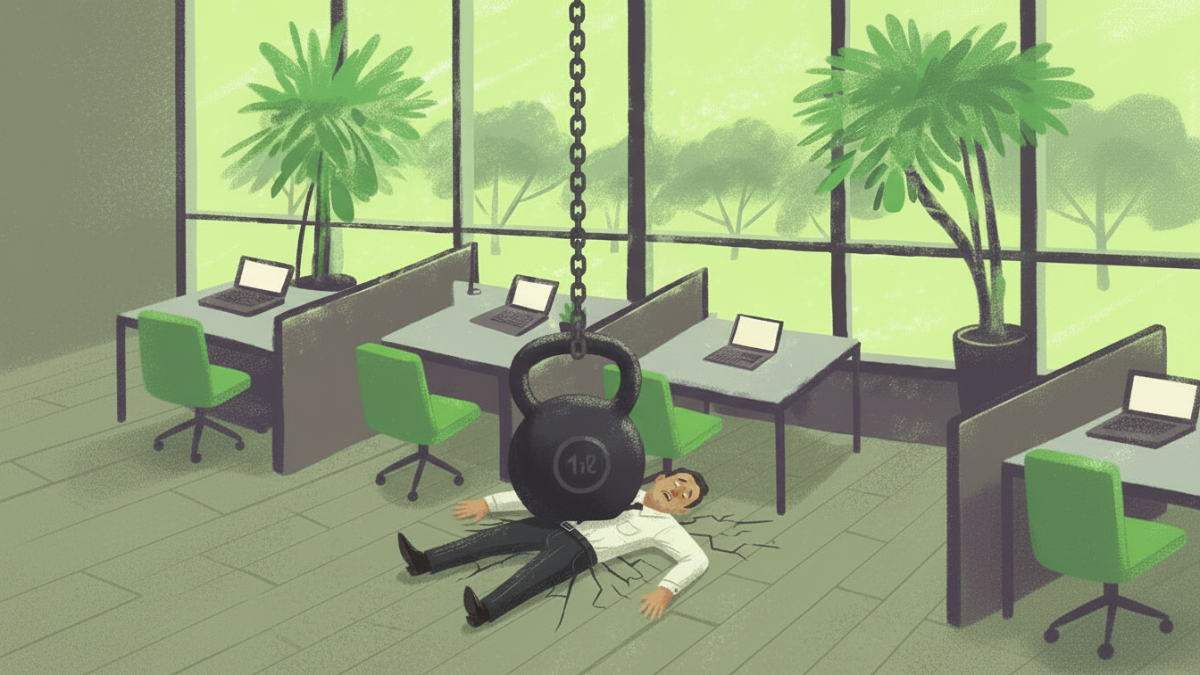
Certainly, there was a meeting in your career that you keep spiraling to. Not because it was dramatic, it wasn’t. It was the opposite of dramatic. Twelve people in a room, an engagement survey on the screen, and a CEO who said: “The numbers are a bit soft, but this isn’t the right quarter to dig into it.” Heads nodded. The deck moved on. And so did the next six months, and the one after that, until “a bit soft” had become “we’ve lost four of our best people in nienty days and no one is surprised.”
This moment has a name now – a culture debt.
Borrowed time, paid back with interest you didn’t budget for. And let’s talk about it honestly, because the way we usually talk about culture in professional circles is still too clean, too consultancy-deck, too far from the actual human mess of what it feels like when it’s happening underneath you.
Because here’s the thing: culture doesn’t collapse. It erodes. It thins out. And the people responsible for catching that, which includes every HR leader and every CEO reading this, are often the last to name it, because naming it means admitting something on your watch went wrong.
What is culture debt and how it builds over time
Culture debt is the accumulated organizational cost of deferring honest action on the conditions that make work human. It builds in layers, and each layer makes the next one easier to rationalize. Here’s how that progression typically looks in practice.
- Stage 1 – The deferral
A high performer leaves citing “personal reasons.” A manager’s team has its third restructure in two years. An engagement score dips four points. Each one has a story attached – a story that’s true, probably, and also incomplete. The debt begins here, not in malice but in the very human preference for a comfortable explanation over a difficult one.
- Stage 2 – The normalization
What got explained away once gets explained away twice. Then it stops needing an explanation because it’s become the baseline. Turnover in that team is just “how that function runs.” Quiet meetings are just “our communication style.” The gap between stated values and actual behaviour stops feeling like a gap and starts feeling like a nuance. - Stage 3 – The structural damage
Now the organization’s day-to-day functioning has adapted around the dysfunction. Workarounds have become processes. People who embody the actual culture (not the stated one) have been promoted into roles with cultural influence. The infrastructure of the unhealthy pattern is now doing real work, and dismantling it means disrupting things that are technically still functioning. - Stage 4 – The reconing
Usually triggered by something visible: an attrition spike, a viral Glassdoor review, a team that misses a critical deadline because trust between members has quietly collapsed. By stage four, you’re not managing culture debt – you’re managing a culture crisis. The cost of repair is now a multiple of what it would have been at stage one.
Most organizations reading this are somewhere between stage two and three. Which is also where the article becomes most useful — because stage two is still recoverable without a transformation programme. Stage four is not.
- 20% of global employee engagement in 2025 – lowest since 2020 (Gallup, 2026)
- $10t lost productivity cost of disengagement worldwide in 2025 alone (Gallup)
- 49% of employees trust their employer to build a culture where everyone can thrive (Randstad 2025)
- 10x more likely: toxic culture drives attrition than pay dissatisfaction (MIT Sloan)
Read that last one again. Not twice as likely. Not three times. Ten times more likely than pay. And yet we still have to sit through more conversations about compensation benchmarking than about whether our managers are psychologically safe to work for. We are, as a profession, still reaching for the wrong lever – often because it’s the one with a cleaner ROI story attached.
Early signs of culture debt, we try to talk ourselves out of
This section is going to feel uncomfortably familiar. That’s the point. These aren’t hypothetical patterns – they’re the ones that appear in virtually every organization that’s carrying significant culture debt. The question isn’t whether you’ve seen them. It’s what story you told yourself when you did.
- The meetings got quieter, and everyone called it efficiency
When a room full of intelligent people stops disagreeing, they haven’t reached alignment. They’ve reached the conclusion that disagreement costs more than it’s worth. That shift in calculation – the moment when safety becomes more valuable than honesty – is the single most reliable early indicator of eroding psychological safety. It doesn’t announce itself. It just makes the room a little less useful, every time.
What you probably told yourself: This is just how this group communicates. We’re past the arguing phase. - The best people left and we told ourselves they were “seekers”
High performers have the most options and the least tolerance for environments that compromise their standards. When selective attrition happens, when it’s the capable, the curious, the culturally influential who leave while others stay, the culture has already tipped. What remains, unless you act, is a workforce increasingly shaped by the people who found it easiest to stay. That’s not a talent pipeline. That’s a slow average-down.
What you probably told yourself: They were always going to move on. It’s just how ambitious people are. - Survey participation dropped and we blamed survey fatigue
People stop filling in surveys when they’ve stopped believing anything will change. That belief is usually earned – through previous cycles where the results were smoothed before reaching leadership, or where actions were promised and not taken, or where the results were simply never communicated back. Low participation isn’t a methodological problem. It’s a trust measurement. When it falls below 60%, the culture problem is already at least a year old.
What you probably told yourself: We’re doing too many surveys. People are just burnt out on the format. - Managers looked exhausted and we called it a busy quarter
Gallup’s 2026 State of the Global Workplace report recorded the steepest single-year drop in manager engagement ever measured – five percentage points in twelve months, from 27% to 22%. Managers are the cultural transmission layer. When they’re burned out, disengaged, or under-equipped, the decay doesn’t stay with them. It moves downward through every team they touch, at scale, every day. A tired manager is a cultural early warning system with a blinking red light.
What you probably told yourself: It’s been a heavy season. They’ll reset over the holidays. - Values were “aspirational,” and we were proud of that framing
The moment values become aspirational – meaning “we’re not quite there yet but we’re working toward it” –they stop functioning as values and start functioning as marketing. Employees track the gap between stated values and rewarded behaviour with extraordinary precision. Every time someone who embodies the actual culture (not the stated one) gets promoted, every time a values violation goes unaddressed because the person is too valuable to challenge, the signal is received. And catalogued.
What you probably told yourself: We’re on a journey. You can’t expect overnight transformation. - People seemed busy, constantly busy, but nothing strategic was getting done
By 2025, “task masking” had entered the HR vocabulary precisely because it was everywhere: employees engaging in high-visibility, low-value activity to signal productivity without delivering real outcomes. When an organization’s culture stops rewarding genuine contribution and starts rewarding the performance of contribution, something has broken in the trust architecture between leadership and the people doing the work. It’s very difficult to name on a spreadsheet. It shows up in missed launches, slow decisions, and strategies that stay in slide decks.
What you probably told yourself: People are stretched. We need to hire. It’s a capacity problem.
The uncomfortable part
We’ve all used at least one of those explanations. Some of them were even partially correct. That’s the precise thing that makes culture debt so difficult to stop: the rationalizations aren’t lies. They’re incomplete truths, applied in the direction of comfort rather than the direction of clarity. Recognizing that pattern in yourself, and catching it before it compounds, is the actual work of culture leadership. It’s not a framework. It’s a practice.
What culture neglect actually costs, and why the numbers miss the worst part
The financial case is unambiguous and should be on every executive dashboard. Here it is, plainly:
| Cost category | What the data shows |
| Culture-driven turnover | $223B Cost to U.S. businesses over a five-year period (SHRM) |
| Global disengagement loss | $10 trillion Lost productivity in 2025 alone – 9% of global GDP (Gallup, 2026) |
| Individual replacement cost | 0.5× – 2× salary Per employee exit, including recruitment, onboarding, and transition drag |
| Per-person disengagement | ~34% of salary Annual productivity loss per disengaged employee (Gallup benchmarks) |
| Healthcare burden | $16B/year Stress-related employee healthcare costs from toxic workplaces (U.S. Surgeon General) |
| Burnout acceleration | 64% weekly Employees experiencing burnout at least once a week in 2025, up from 48% in 2023 (McKinsey) |
Now, take the disengagement number and apply it locally. If you have 150 people and 30% are disengaged – a conservative estimate given current benchmarks – you’re carrying the equivalent of roughly fifteen full-time salaries in productivity you’re paying for but not receiving. That’s before a single person has handed in their notice.
And then there’s the reputational compounding. In 2025, employee activism (people documenting and sharing their workplace experiences publicly, sometimes in real time) moved from a niche phenomenon to a genuine organizational risk. Glassdoor ratings are lagging indicators: by the time they move, the culture has been declining for months. Your employer brand is built or destroyed in thousands of daily interactions that no communications strategy can manage from the outside. That talent pipeline you’ve invested in? It’s permeable in ways that don’t show up until you need it.
The emergency plan – what to actually do when you spot the fist culture cracks
Let’s shift to “we” here, because this isn’t an HR problem or a CEO problem. It’s an organizational problem, and the only version of the solution that works is the one that’s owned collectively at the top. Here’s the response sequence that actually moves the needle – in the right order, which matters.
1. We diagnose before we announce anything
Run a short, focused anonymous pulse survey: five to eight questions targeting psychological safety, manager trust, and clarity of direction. Not a comprehensive culture audit — you need a fracture map, not a census. Where is the pain concentrated? Is it systemic or team-specific? Who still carries the culture forward, and where are the voids? Then – and this is the part people skip – share what you found. Even if it’s uncomfortable. Especially if it’s uncomfortable.
The instinct to soften findings before presenting them to the executive team is understandable. Resist it. Softened findings produce softened responses, which produce unchanged cultures. Share the raw signal.
2. We close the loop within two weeks – publicly
Silence after a survey is itself a culture message, and your employees are exceptionally good at reading it. Within two weeks of your pulse, communicate what you heard, what you’re taking seriously, and what you’re committing to – even if the plan is partial. “Here’s what we found, here’s what we’re not sure about, and here’s what we’re doing next” is vastly more trust-building than a polished response that takes six weeks to arrive.
3. We fix the manager layer – because that’s where culture lives or dies
Seventy-six percent of employees hold their direct manager responsible for setting their cultural experience. Not HR, not the CHRO, not the CEO’s newsletter. The person they report to on Tuesday morning. And right now, manager engagement is at its lowest recorded level globally. Fixing this means examining span of control, giving managers genuine permission to raise capacity and conflict concerns upward, and making senior leadership visibly accountable for the culture they model – not just the culture they describe in company values documents.
If there’s a senior leader in your organization who consistently delivers results through fear or dysfunction, and they haven’t been addressed, every culture initiative you run is working against itself. Everyone below that person already knows it. Addressing it is the loudest possible signal that the repair is real.
4. We rebuild psychological safety as the non-negotiable floor
Every other intervention in a culture recovery depends on this one. Psychological safety can’t be declared – it’s rebuilt through a series of concrete, observable acts: leaders who model intellectual humility in public, accountability that genuinely runs in both directions, zero tolerance for retaliation when someone raises a concern through the right channels. This takes longer than you want, and the pressure to rush it – to declare it done so the organization can move to the next item – is itself a cultural risk. Sit with the discomfort of building it properly.
5. Move your metrics from lagging to leading
Attrition rates, absenteeism figures, and Glassdoor scores are post-mortems. They tell you what the culture already was. We need monitoring for what it’s becoming: meeting participation patterns, whether informal feedback is reaching leadership or stopping at middle management, how often managers are having genuine development conversations versus compliance check-ins, and whether people are bringing problems to their direct leaders or finding workarounds. Culture health is an operational metric. We treat it like one.
6. Make it executive-owned – not HR-owned
This is the step that determines whether everything above it works or doesn’t. Culture recovery that lives primarily in the HR function will be perceived, correctly, as a managed exercise. The CEO and the executive team need measurable skin in the game: a specific commitment, tracked publicly, with a named owner who isn’t the CHRO. HR diagnoses, designs, and facilitates. It was never designed to substitute for leadership ownership, and in the organizations where that substitution has been attempted, it has never worked.
If you’re in HR and you’re nodding: yes, this is the conversation you need to push for. Yes, it’s uncomfortable to say “we need you to own this, not just sponsor it.” Push for it anyway. This is the part where you earn the seat at the table or confirm that you already have it.
Why culture debt can’t wait
If you sit in a boardroom watching engagement numbers scroll past while someone says “not the right quarter,” it rarely feels like a defining moment. It feels temporary. Contained. Easy to revisit later.
But in most cases, you already know something is wrong. And that instinct is usually right.
The instinct that culture problems need to wait for a better moment is almost always wrong. There is no better moment. There is only the debt accruing, quietly, while you wait for one. And the people carrying that debt, the ones absorbing the friction, doing their best work inside an environment that’s stopped deserving it, are not going to wait indefinitely for the organization to notice.
They’ll leave. Or they’ll stay and quietly stop caring. And both of those outcomes are preventable, if you’re willing to name what’s happening while there is still time to change it.
Culture isn’t an annual survey. It’s not a values poster. It’s not an offsite. It’s the sum of every decision made about how people are treated, every day, by every leader, in every interaction. Which means it’s also the sum of every chance to do it differently. Including this one.
If something in this piece landed, share it with someone who needs to read it, not as an accusation, but as an opening to a conversation that probably needs to happen. Culture problems don’t get fixed in articles. They get fixed in rooms, by people who are willing to be honest in them.
If you’re already in that room and not sure what to say, come back to the emergency plan above. Start with the pulse. Close the loop fast. Own the findings without softening them. The rest follows from there.
Questions we hear most often
What exactly is culture debt – and is it different from just having a bad culture?
Culture debt is the gap between the culture an organization promotes and the one it actually operates with, built over time through delayed or avoided decisions. Organizations with genuinely strong values can carry significant culture debt if they’ve consistently deferred the hard decisions that would have kept those values real. The debt is the distance between the poster and the practice.
Which warning signs of culture debt do HR leaders most commonly miss?
The most frequently rationalized ones: meetings growing quieter (read as alignment rather than psychological safety erosion); selective attrition of high performers (attributed to “seekers” rather than a culture signal); declining survey participation (blamed on survey fatigue rather than eroded trust); and managers looking visibly exhausted (treated as a capacity issue rather than a leading indicator of team-level decay). Each is easy to explain away. Together, they’re a pattern worth acting on immediately.
What’s the single most important first move when you spot a culture problem?
Diagnose before you prescribe. The instinct is to announce something – a programme, a listening tour, an offsite. Resist it. Announcements without follow-through are the fastest way to burn through remaining trust. Run a short anonymous pulse survey, get an honest fracture map of where the pain lives, and communicate back what you found within two weeks – even if the plan is still partial. Silence after a survey is itself a culture message. Speed and honesty, in that order, are the first acts of rebuilding trust.
Why is culture always the thing that gets deferred?
Because it doesn’t have a quarterly deadline and the P&L won’t immediately reflect it. It’s also emotionally costly – addressing culture means confronting decisions leaders made (or didn’t), behaviours they tolerated, and gaps between what they promised and what they delivered. That’s uncomfortable. And uncomfortable things get moved to next quarter, until next quarter is next year, and the debt has compounded past the point of easy repair. The organizations that break this pattern are the ones where someone – usually in HR, sometimes the CEO – decides to name the problem before it’s politically correct to do so.

Onboarding Debt: Why a Weak Employee Onboarding Process Costs More Than a Bad Hire

Ghost jobs explained. Why companies post them, and how to avoid losing candidate trust

Leading Through Continuous Change: The Rise of Anticipatory Fatigue

The Ethics of AI in Recruitment: How Much of the Hiring Conversation Can a Machine Own?

Employee Referrals Aren’t Favoritism. They’re Organizational Intelligence.
-

 Collaboration1 year ago
18 Experts Share Tips for Businesses Switching to Remote Work
-
 Communication1 year ago
6 Communication Plan Templates With Examples
-
 Collaboration1 year ago
30 Work From Home Memes: Funny Work Memes to Make You Laugh
-

 Collaboration1 year ago
6 Tips for Lifting the Burden of Too Many Responsibilities
-

 Productivity1 year ago
Super True Mental Health Memes You’ll Probably Relate To
-

 Collaboration2 years ago
7 Easy Strategies for Effective Team Communication
-
 Collaboration2 years ago
35+ Collaboration Quotes to Celebrate Teamwork
-

 Communication1 year ago
5 Innovative Ways to Use Chat Tools for Marketing