
Employee Wellbeing
The 2026 Employee Experience Trends Nobody Wants to Name


Let’s skip the part where we pretend everything is fine.
These are the employee experience trends shaping 2026 – based on current data and what teams are actually experiencing on the ground. Not what the Q1 strategy deck predicted. What people are actually living through.
Employee engagement has been on a slow decline for years. The pandemic reshuffled priorities. The RTO battles left scars. And now, just when teams were supposed to stabilize, a new disruptor has arrived: AI. Half the workforce fears it. The other half is secretly using it behind IT’s back.
The 2026 employee experience landscape doesn’t break because of resources or strategy. It breaks on honesty. Leaders are not reading the room. And the data is blinking red.
Employee experience trends 2026: quick overview
Before we dive deeper, here is what the research shows at a glance:
- Employee stagnation is reducing engagement – despite the illusion of stability
- Shadow AI adoption is rising because organisations haven’t provided approved tools
- Onboarding satisfaction is declining – new hires are arriving disillusioned, not energized
- Manager perception gaps are widening – leaders think they’re showing up, while employees disagree
- AI anxiety is actively driving disengagement, especially where leadership stays silent on job security
These trends define how employees experience work in 2026. Not as policy – as reality.
1. The Goldilocks zone of pressure (or stagnation is not a safety)
Workplace stagnation is one of the most underestimated employee experience trends in 2026. Employees in low-change environments report lower engagement than those under supported pressure – and the gap is larger than most managers assume.
74% vs. 59%
Employees under high pressure with support report 74% engagement. Those facing no change: 59%. The assumption that stability equals well-being is quietly wrong.
Think of what workplace stagnation actually looks like in practice. A team that hasn’t changed its ways of working in eighteen months. Processes that everyone knows are broken but nobody has the energy to fix. Meetings that produce meeting notes that, in turn, produce more meetings. The energy stops moving. And when energy stops moving in a team, what you get is not calm – it’s a swamp.
The swamp metaphor works because stagnation is not neutral. It lingers and, over time, develops a smell that’s hard to ignore. The people most sensitive to it react first, and they don’t hesitate for long. High performers leave first.
Others stay, but not in the same way. They start holding on more tightly to their roles, not out of commitment or growth, but because the external market feels uncertain and moving feels risky. This is where ‘job hugging’ begins.
The term entered workplace vocabulary in 2025, and it’s accelerating into 2026. Perceptyx’s longitudinal analysis of over 20 million employee survey responses shows how quickly this behavior is spreading.
And it rarely stays static for long. This is usually when the urge to change something kicks in. To move. To improve. Even before the direction is fully clear.
And then a new manager arrives, or a consultant drops a presentation, or Q1 numbers disappoint. Suddenly, the swamp gets a heat source – urgency without structure.
What follows is predictable. The team goes from stagnant to overloaded in two quarters. The same people who were disengaged from boredom are now disengaged from exhaustion. The swamp didn’t transform into a river. It became a boiling cauldron – and the best employees are the first ones to jump out.
The research is clear about what actually works: supported change. Not protected stillness. Not reactive chaos. The Goldilocks Zone is high-challenge environments where managers actively listen, provide resources, and communicate the why. That combination correlates with engagement scores 15 percentage points above stagnant teams.
What this trend means in practice
Stability is no longer perceived as safety. Without movement and clear support, teams disengage even when nothing is visibly wrong, and reactive overcorrection accelerates the damage. The manager’s job in 2026 is not to protect teams from pressure, but to make pressure navigable.
2. Shadow AI: your team is drowning and has built their own life raft
Shadow AI is one of the fastest-growing employee experience trends in 2026 – and one of the least discussed. Employees are not using unauthorised tools because it’s exciting. They are doing it because they are drowning in work, and no approved alternative exists.
52% of employees use AI tools weekly.
Many are bypassing approved channels entirely – because no approved channels exist for their actual workflow needs.
The Qualtrics 2026 Employee Experience Trends report is direct about the consequence: when teams use personal, unvetted AI accounts, your data can end up anywhere. The security risk is real. But the root cause is not recklessness – it’s a productivity gap the organisation created and chose not to fill.
AI anxiety makes this harder. On one side, you have employees quietly building workarounds. On the other, you have a leadership team that believes the rollout is going well.
89% vs 57%
89% of executives reported their company had an AI strategy. Only 57% of employees agreed one existed.
The BCG data, published through Harvard Business Review in late 2025, made the gap even starker: 76% of executives believed their employees were enthusiastic about AI adoption. Just 31% of individual contributors expressed actual enthusiasm. That is not a communication problem. That’s just two different experiences of the same workplace, existing at the same time.
The WTW Global EX Market Study introduced a term worth knowing: FOBO – fear of becoming obsolete. 47% of employees fear AI may replace their jobs within five years. Those anxious about AI are 45% more likely to disengage. When clarity is missing, fear fills the gap. The organizations failing at AI adoption are mostly the ones that never acknowledged the fear existed.
Nearly 70% of CEOs and senior executives use AI for less than one hour a week.
Including 28% who never use it at all – while tracking employee AI adoption in performance reviews.
The inversion would be poetic if it weren’t operationally dangerous. Employees hide their AI use because they’re anxious about being replaced. Leaders mandate AI adoption while barely using it themselves. And somewhere in the middle, the company’s data is living on a free-tier account the legal team has never reviewed.
The fix is not a policy memo. It is a concrete AI tool selection strategy that accounts for what employees actually need. Provide specific, secure tools for specific purposes. Train people in context. Have honest conversations about what these tools are changing – including which roles will shift and how. The SHRM State of AI in HR 2026 report is clear: AI adoption is driving role-shifting, not mass replacement. But employees won’t believe that until leadership says it clearly and models the behavior it demands.
What this trend means in practice
Shadow AI is a symptom, not a root cause. Employees source their own tools when the organisation leaves a productivity vacuum. Closing that vacuum – with real tools, real training, and honest communication about AI’s impact on roles – is the only intervention that addresses both the security risk and the fear underneath it.
3. The new hire honeymoon is over – and nobody held a funeral
Declining onboarding satisfaction is one of the most consequential employee experience trends in 2026. For the first time, new employees are often less engaged than tenured staff – flipping the dynamic HR teams have relied on for decades.
36% Of new hires say their onboarding met expectations.
Their first impression of the organization was also their most disappointing experience.
Qualtrics, who have tracked this for years, put it without diplomatic cushioning: the new hire honeymoon is not only over, it’s heading for divorce. New employees arrive already skeptical, already exhausted from a volatile job search, already primed to wonder whether this place is different from the last one.
The first 90 days used to be when employees fell in love with a company. Now it’s when the disillusionment begins.
This is a compounding problem. New hire energy used to raise the engagement average. Now it lowers it. And the Perceptyx longitudinal data reveals something even more foundational has shifted: belonging and feeling valued – top engagement drivers for nearly a decade – fell to bottom positions in 2025. What replaced them: change management effectiveness and confidence in senior leadership.
That shift matters enormously for onboarding. New hires in 2026 are not primarily asking, ‘Will I belong here?’ They are asking ‘Do I believe this leadership team knows what they’re doing?’ If the onboarding experience doesn’t answer that question convincingly, no amount of welcome kits or buddy systems compensates.
The cost-cutting trap is also documented. Some organizations have reduced onboarding investment as a budget line. Qualtrics is direct: it is a false economy. You are not saving onboarding costs. You are transferring them to turnover costs six months later.
What this trend means in practice
Onboarding in 2026 needs to answer the questions new hires are actually asking – not the questions HR assumed they’d ask in 2019. Introducing leadership credibility, not just company culture. Showing how decisions get made. Not pretending the organization is something it isn’t, because people find out within weeks, and the betrayal is harder to recover from than the honest version.
4. The manager engagement crisis nobody is measuring correctly
The widening manager perception gap is an employee experience trend that quietly undermines every other initiative in 2026. Managers think they’re showing up. Employees disagree, and that gap is not closing on its own.
59% vs. 80%
59% of managers believe theirengagement increased last year. 80% of employees say it stagnated or declined.
Gallup’s February 2026 data connects this directly to AI adoption: the strongest predictor of whether employees actually adopt AI is whether their manager actively champions it. Even the most sophisticated tools cannot overcome an indifferent team leader.
This creates a tight knot. You need manager buy-in to make AI work. Managers are already overloaded. They are now expected to use AI themselves, translate strategy to skeptical teams, and support direct reports who are anxious about their jobs – all while their own engagement is slipping. The organizations getting this right treat manager development as a continuous product, not an annual training event.
What this trend means in practice
The manager layer is both the problem and the solution. Perception gaps compound into failed adoption, unaddressed burnout, and departed talent. Closing that gap requires structural support – not just better communication expectations – and organizations that treat their managers as a population in need of active listening, not just active management.
What all of these trends mean for HR leaders going into 2026
The pattern across all four of these employee experience trends is the same: the gap between leadership perception and employee reality is widening. And in every case, that widening gap is more expensive than the honest conversation would have been.
The managers who retain their best people in 2026 will not be the ones returning to normal. They will be the ones who can do three things:
- Listen actively and structurally – not just in annual engagement surveys, but through continuous, lightweight feedback loops that surface what’s actually happening on the ground.
- Support change with honesty – give teams enough pressure to stay engaged, enough support to handle it, and enough transparency to trust the people above them.
- Close the AI gap deliberately – give employees real tools, real context, and honest conversations about what AI means for their roles. The fear doesn’t disappear; it becomes manageable when leadership acknowledges it out loud.
The employee experience in 2026 is not asking for more frameworks or quarterly initiatives. It’s asking for something simpler and harder: leaders who are paying attention, and who are willing to say that they actually see.
Your team already knows what’s wrong. The question is whether you’re the kind of leader they trust to say it out loud first.
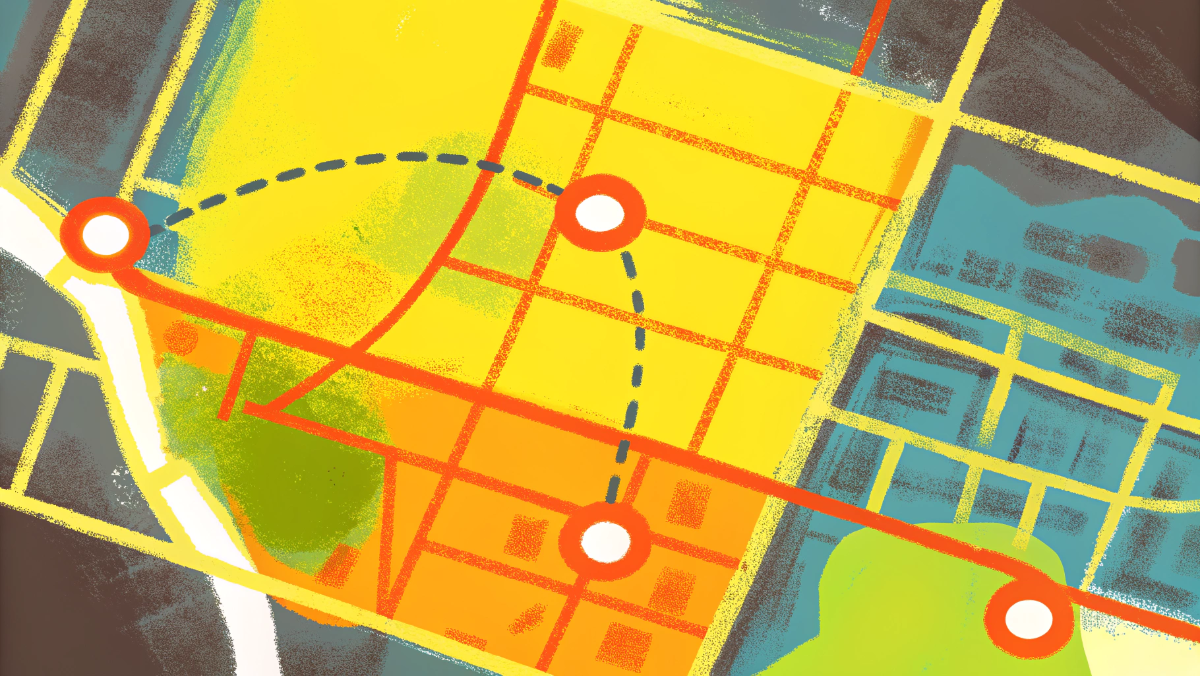
An employee journey is the complete story of a person’s relationships with a company. It begins long before the first day: in the moment someone reads a job posting, hears your name from a colleague, or notices how your brand shows up in the world. It continues through every interaction that follows. Through the hiring process, the onboarding weeks, the small moments of recognition or neglect, the performance reviews, the restructuring, and eventually – the departure.
It is, in short, a human story. And like most human stories, it is full of uncertainty.
Think back to your first day at a new job. Not the official version – the real one.
You probably didn’t know where the bathroom was. You weren’t sure who to ask about that strange expense reimbursement process. Someone told you something important during onboarding, and you nodded, but you had no idea what they were talking about. You smiled a lot. You Googled things you were embarrassed not to know. You went home that first week wondering, quietly, whether you’d made a mistake.
Now ask yourself: Does your company know that story?
Not the survey data, not the exit interview summary. The actual texture of what it felt like to arrive.
Most companies don’t. And that gap – between what leaders assume the employee experience is, and what it actually is – is exactly what employee journey mapping is designed to close.
Employee journey mapping at a glance
Employee journey mapping is the process of understanding how employees experience every stage of their relationship with a company, so organizations can design a more intentional, human employee experience.
Here is what employee journey mapping actually helps organizations do:
- Identify friction points in the employee lifecycle before they become turnover
- Understand employee emotions at every critical stage – not just average satisfaction scores
- Design onboarding and development programs that reflect how people actually experience them
- Build a coherent employee experience strategy grounded in reality, not assumptions
- Reduce disengagement and prevent avoidable voluntary turnover
A journey map isn’t another org chart, or an HR process diagram – it’s an empathy tool. And its purpose is to make the invisible visible.
What is employee journey mapping, and why does employee experience depend on it?
Employee journey mapping is the practice of charting the full arc of an employee’s relationship with an organization. It is a structured way of seeing your company not through policy documents or leadership meetings, but through the eyes of the people doing the work.
It borrows from customer experience design, where companies have long recognized that customers don’t experience a product feature by feature. They experience it as a journey, with emotional peaks and troughs, moments of delight and confusion, inflection points where they decide to stay loyal or walk away.
Employees experience their workplaces exactly the same way.
Not as a series of HR processes, but as a continuous story – of belonging or isolation, of growth or stagnation, of trust built or quietly eroded.
A well-executed employee journey map becomes the foundation of a coherent employee experience strategy – one that is grounded in reality, not assumptions.
Why employee surveys aren’t enough?
This is not a critique of engagement surveys. They have their place. But they have a structural limitation that journey mapping addresses: they ask employees how they feel about their current state, not how they felt at each critical moment along the way.
A 7.2/10 engagement score tells you something is slightly wrong. It does not tell you that the real problem started in week three of onboarding, when a new hire’s manager went on vacation, and nobody thought to assign a temporary point of contact. It doesn’t tell you that a talented mid-level employee started mentally leaving eighteen months ago, after a promotion cycle where the criteria were never explained.
The signal is in the story, not the score.
Journey mapping captures the emotional reality that numbers flatten. It reveals the moments that matter, the ones that build commitment, or quietly erode it, and it does so with the kind of specificity that makes action possible.
The six stages of the employee lifecycle
While every organization has its own rhythms and context, most employee journeys pass through six recognizable stages. Understanding each one – and the emotional undercurrents within it – is the foundation of effective employee lifecycle mapping.
Stage 1: Attraction
Before someone is an employee, they’re an observer. They see your job postings, read Glassdoor reviews, hear from people in their network, and notice how your company talks about itself.
This stage shapes expectations that the rest of the journey will either confirm or shatter. Your employer brand is not what you say it is. It is what people conclude it is, from the evidence available to them.
What employees often experience here: excitement, skepticism, calibration. They are actively comparing you to other options and reading between the lines of your employer brand.
Stage 2: Hiring and selection
The hiring process is a two-way interview. Candidates are assessing culture, communication, and integrity in every interaction – how quickly you respond, whether interviewers seem engaged, and if the process feels fair and transparent.
A clunky, ghosting-prone hiring process doesn’t just lose candidates. It loses future ambassadors, and sends a signal about how your organization treats people when it doesn’t need them anymore.
You probably know the feeling: you applied somewhere, got two rounds in, and then heard nothing for three weeks. Even if you got the job, you remember that silence.
Stage 3: Onboarding
Here is where the gap between promise and reality becomes most acute. Onboarding is the most emotionally charged stage of the employee experience, and consistently the most underinvested.
The first 90 days are emotionally loud, even when they look quiet from the outside. A new hire is constantly interpreting signals:
- Can I ask questions here without looking incompetent?
- Do people actually want me in this room?
- What happens when someone makes a mistake?
Most onboarding programs focus on information transfer. Employees are trying to answer belonging questions instead.
Real moment that matters: The first time a new hire makes a mistake. How their manager responds in that moment shapes their psychological safety for months.
Stage 4: Development and growth
After the initial adjustment period, employees enter a longer middle chapter – and this is where many organizations lose the plot.
Growth is no longer about the job itself; it’s about trajectory: Am I learning? Am I visible? Do I have a future here?
You know that quiet moment when you realize you’ve learned everything this role has to teach you, and no one has asked what you want to do next? That’s when people start updating their LinkedIn profiles.
Without intentional career conversations and honest performance feedback, this stage becomes one of quiet stagnation – a primary driver of voluntary turnover.
Stage 5: Transition and change
Promotions, restructuring, a new manager, a shift in company direction – moments of changes are high-stakes chapters in the employee lifecycle. They are either opportunities to deepen commitment or triggers for departure.
The critical variable is never the change itself. It is the communication around it. Do employees understand what is happening and why? Do they feel they have any agency within the shift?
Stage 6: Departure
Employee journey ends. How it exactly ends matters – both to the departing employee and to the colleagues who watch.
A thoughtful offboarding process and genuine expression of gratitude can turn a former employee into a lifelong advocate. Handle it poorly and you’ll lose not just that one person but the trust of everyone who witnessed it.
How to build an employee journey map: a step-by-step guide
There is no single correct format. Some organizations use elaborate visual frameworks; others use a simple spreadsheet. What matters is the process. Here is a practical approach for any team.
1. Define your scope
Are you mapping the entire employee lifecycle, or focusing on one stage? Starting narrow is wiser. A focused map done well outperforms a sweeping map done superficially. Onboarding is usually the best place to start: the stakes are high, the friction is concentrated, and the findings tend to be immediately actionable.
2. Choose your persona(s)
Not all employees have the same journey. A software engineer’s experience may differ dramatically from a customer service rep’s. Build personas from real data, not stereotypes, and decide whether to map one segment or several.
3. Gather qualitative data first
This is the most important step and the most commonly skipped. Before building anything, talk to people. Run listening sessions or small focus groups. Ask employees to narrate their journey in their own words – what they felt proud of, confused by, and unsupported in. Record everything. Resist the urge to interpret prematurely – that comes later.
4. Identify the moments that matter
As patterns emerge, certain moments will surface repeatedly: the first performance review, the first time someone was passed over, the restructuring announcement. These are your critical touchpoints. Not every moment matters equally – your job is to find the ones that shape the arc of the whole experience.
5. Plot the emotional journey
Map each touchpoint against two axes: emotional state (positive to negative) and lifecycle stage. What emerges is a curve – and the valleys are where your attention is most needed. Look specifically for where expectations meet reality, and where they don’t.
6. Validate and iterate
Before acting on your map, share it back with employees. Ask: does this reflect your experience? What’s missing? A journey map built without employee validation is just a better-looking assumption. With it, it becomes a genuine tool for change.
The most common mistake in employee mapping
Many organisations approach journey mapping the way they approach most HR initiatives: they convene a leadership team, debate the ideal employee experience from a conference room, and produce a document that reflects their assumptions rather than employees’ realities.
A journey map built in a boardroom is not a journey map. It is a strategy document with better graphics.
The antidote is structural: employees must be the primary source of data before leadership enters the process. Executives can help interpret and prioritize. They cannot substitute for lived experience.
This requires organizational humility. Leaders must be willing to discover that the onboarding they designed is confusing, that the performance process they’re proud of is dreaded, that the culture they describe in all-hands meetings is not the culture people experience on a Tuesday afternoon. That willingness is not weakness. It is what makes the exercise real.
The journey is not a metaphor
We use the word journey because it captures something true: the employee experience unfolds over time, with a beginning, a middle, and an end. It has plot points and turning points. It produces a story that each person carries with them – and tells others.
The question for HR leaders and executives is not whether that story exists. It does, in every person who has ever walked through your door. The question is whether you know it. Whether you have done the work to understand your employee experience strategy on its own terms, from the inside out.
Employee journey mapping is not the most sophisticated tool in the HR toolkit. But it may be the most human one. It asks organizations to do something genuinely difficult: to forget what they think they know, make the trip back to day one, and see, with something approaching fresh eyes, what their people actually experience across every stage of the employee lifecycle.
The companies that do this well don’t just build better HR processes. They build the kind of places people actually want to stay.
Quick reference: Starting your journey mapping practice
Ready to begin? Here are the essential first actions:
- Select one employee segment to focus on – don’t try to map everything at once.
- Schedule 6-8 listening sessions across that segment, at different stages of tenure.
- Use open-ended prompts: “Walk me through your first month here.” “Tell me about a moment you consider leaving.” “What did you wish you’d known earlier?”
- Look for recurring moments and recurring emotions – not just problems, but bright spots too.
- Build a draft map and share it back with employees for validation.
- Present findings with specific, actionable intervention points rather than general observations.
- Commit to a follow-up. The most corrosive outcome of a listening exercise is silence afterward.
Employee Wellbeing
Employee Experience Meaning: What It Really Is – and Why It Decides Your Company’s Future

If you search “employee experience meaning,” you will find dozens of clean definitions. Concise. Glossary-ready. And largely useless in practice. Because employee experience is not a term to define – it is a condition to understand. And understanding it begins not with a framework, but with a memory.
Think back to your first job. Not your current role – go further. The first time you put on a badge, logged into a company system, set down a mug you brought from home, and thought: okay, this is where I begin. You had hopes for that place. Maybe the quiet ones, maybe you don’t properly articulate them at that time. But you had them. You wanted to matter, to learn, to be seen. To do work that made you feel, at the end of the day, like the spent hours meant something.
That feeling – that implicit contract between a person and a place – is what employee experience is made of. And every person in your organization is carrying a version of it right now.
What is employee experience?
In one sentence, employee experience is the sum of everything an employee encounters, observes, and feels throughout their entire journey at a company.
In other words, it’s what work actually feels like from the employee’s perspective.
Employee experience (EX) is the totality of interactions, environments, and conditions that shape how employees feel about their work and workplace. It spans the entire lifecycle, from the first contact during recruitment to the moment they leave.
It encompasses:
- The physical environment where people work
- The technology they use to do it
- The cultural and human conditions they work within:
- how they are managed
- whether they feel psychologically safe
- whether their work feels meaningful
- whether their growth is genuinely supported
Employee experience is not a program or benefit. It’s the lived reality of being a part of your organization, day after day.
This definition matters because it shifts the frame. EX is not something HR does to employees. It is something employees live inside. That distinction determines whether your efforts produce real change or expensive noise.
Why employee experience meaning goes deeper than satisfaction
Satisfaction is a snapshot. It tells you how someone feels right now – after a raise, after a good quarter, after a team offsite. Experience is a whole film. It’s the accumulated texture of every interaction, every decision that affected someone without involving them, every time they were seen or overlooked.
This is why engagement surveys with strong scores coexist with high turnover. People can be satisfied with their compensation while quietly disengaging from work that no longer feels meaningful. They can score their manager positively while still updating their CV on Sunday evenings.
Here is the truth that too many business conversations dance around: your employees are not a workforce. They are people who have made a remarkable choice – to give a significant portion of their finite, irretrievable time to your organization. Not surplus time. Their life time. The same hours they could spend with their families, building something of their own, or simply resting. But they chose you.
Employee experience, at its core, is simply the: was that choice worth it?
What shapes employee experience? The three core environments
Researcher Jacob Morgan identifies three environments that define the employee experience in any organization:
- Physical environment – the spaces where work happens, whether that’s an office, a remote setup, or something hybrid
- Technological environment – the tools and systems employees use daily; friction here is invisible but corrosive
- Cultural environment – how people are managed, how decisions are made, whether voices are heard, and whether the stated values match the lived ones.
Of these three, culture is both the most powerful and the hardest to measure, which is exactly why it tends to receive the least structured attention.
The business case for investing in employee experience
Because yes, the numbers matter too
Gallup’s ongoing research consistently shows that organizations in the top quartile of employee engagement outperform peers on key metrics:
- 23% higher profitability
- 18% higher productivity
- 43% lower turnover compared to the industry average
- Customer satisfaction scores that track engagement scores with remarkable consistency
But beyond the upside, consider the cost of the alternative. The average cost of replacing an employee sits between 50% and 200% of their annual salary, depending on seniority and role complexity. Multiply that by your annual attrition rate, and you have a number that reframes “investing in employee experience” as exactly what it is: straightforward risk management.
The four stages of employee experience (and where most organizations fail)
Employee experience isn’t a single moment. It’s a journey with distinct phases, and each one is an opportunity to either build trust or erode it.
Stage #1: Attraction & first impression
The story you tell before someone joins. Are you honest about what working here is actually like? The gap between what’s promised and what’s delivered is where disillusionment is born – sometimes within the first 90 days of probation period.
What to change: Include candid, unscripted employee voices in your recruitment process – not polished testimonials, but real accounts. Audit the delta between your employer brand and your exit interview themes. If they don’t match, your EVP is fiction.
Stage #2: Onboarding and belonging
The period when a new person is most vulnerable and most impressionable. Do they feel welcomed or processed? Do they understand where they fit? The first few weeks set a template for the entire relationship.
What to change: Redesign onboarding around connection before compliance. Push legal and admin paperwork to self-serve portals. Use that first week for deliberate relationship-building with team members, cross-functional partners, and leadership – not policy decks.
Stage #3: Growth & everyday work
The long middle – where most of a career is actually lived. Is work meaningful? Is feedback honest and kind? Is there a future here, or just a role to maintain? This is where engagement quietly builds or quietly collapses.
What to change: Make career development a standing structural feature, not an annual event. Embed growth conversations into the rhythm of 1:1s. Give managers the tools, time, and training to actually develop people – not just evaluate them.
Stage #4: Transition & departure
How people leave matters as much as how they arrive. An exit handled with dignity converts a departing employee into an ambassador. An exit handled badly becomes a Glassdoor review and a warning to their network.
What to change: Treat exit interviews as a strategic intelligence, not a formality. Track themes by manager, team, and tenure. Feed findings into leadership reviews – not just another unread HR report. Departures are expensive data that most companies throw away.
Stage three, the long middle, is where most organizations fail. Not dramatically. Quietly. The absence of meaningful feedback, blocked growth, and invisible overload accumulate without triggering any alarm. By the time someone resigns, the decision was made months earlier.
Who is responsible for employee experience?
There is a habit of thought in leadership discussions that separates “the business” from “the employees” as they are two distinct parties with competing interests. This framing is not only philosophically wrong – it’s strategically catastrophic.
Your managers are employees. Your HR team is made up of employees. Your CEO, yes, is an employee too – in most of the ways that matter. Every person in the chain of your organization is someone who shows up, needs to feel purposeful, wants to be respected, and brings their full complexity to work every single day, whether you invite it or not.
The manager who is overwhelmed and undersupported cannot give their team the attention those people need. The HR director who is burned out cannot build empathetic people programs. The executive who has never felt truly psychologically safe in a meeting cannot create that safety for others.
Experience flows downward. Culture is not declared – it’s modeled, repeated, and lived.
A few structural shifts that make this real:
- Audit your promotion criteria for people managers. If the criteria are indistinguishable from those for individual contributors: output, delivery, and technical skill, you are not measuring management at all.
- Add explicit, weighted criteria for team retention, development of direct reports, and psychological safety.
- Build always-on listening infrastructure – short, frequent pulse checks tied to a defined response protocol. The goal is a shorter distance between what employees live through and what leadership knows, not more data to keep an eye on.
Why employee experience matters more right now than it ever has
We are living through a profound renegotiation of the relationship between people and work. The events of recent years – remote work at scale, mass layoffs, the quiet quitting conversation, the mental health reckoning – have done something irreversible: they have made the question of why am I doing this? impossible to ignore.
Employees today are more informed, more mobile, and more willing to walk away from work that doesn’t serve them than any generation before. They are not, as some frustrated executives suggest, less committed or less willing to work hard. They are simply less willing to sacrifice everything for an organization that treats them as interchangeable. And they are right.
The talent market has not “returned to normal.” There is no normal to return to. The organizations that will attract, retain, and unlock the best people in the next decade are the ones that understand this shift – not as a challenge to manage, but as an opportunity to lead.
The best retention strategy is simple: make it worth staying. Not with perks. With meaning, respect, and honest investment in human growth.
The bottom line on employee experience meaning
Building great employee experience is not soft. It is not a nice-to-have. It is the hardest, most leveraged operational work a leadership team can do.
It requires the courage to hear difficult truths, to change systems that have become comfortable, and to give people real agency rather than the performance of it.
Go back to that person on their first day – carrying hopes they didn’t fully articulate. They needed someone in authority to make good on the implicit promise that their time here would be worth it. Now you hold that position.
The question is not whether you understand the meaning of employee experience; it is whether your structures are built to honor it.
FAQ
What is the difference between employee experience and employee engagement?
Employee engagement is the level of emotional commitment a person has to their organization and work – it is an outcome. Employee experience is the totality of conditions that produce or erode that commitment – it is the cause. You cannot sustainably improve engagement without improving the experience that drives it. Focusing on engagement scores without addressing the underlying experience is treating symptoms rather than the condition.
Why does employee experience matter for business performance?
Organizations with strong employee experience consistently outperform peers across profitability, productivity, customer satisfaction, and innovation. Gallup research links high employee engagement – the behavioral output of positive EX – to 23% higher profitability. Beyond performance, poor employee experience directly drives turnover, which costs between 50% and 200% of an employee’s annual salary to address. Strong EX is fundamentally a financial discipline, not a human resources luxury.
What are the key components of employee experience?
Employee experience is shaped by three interconnected environments: the physical workspace (where and how people work), the technological environment (the tools and systems they use), and the cultural environment (how they are led, whether they feel safe, and whether their work feels meaningful). Of these, culture has the greatest long-term impact on retention and performance – and receives the least systematic attention in most organizations.
What is the role of managers in employee experience?
Managers are the single most influential variable in any individual’s employee experience. Research consistently shows that the quality of the direct manager relationship is the strongest predictor of engagement, retention, and well-being at work. An organization can have strong values, generous benefits, and excellent leadership at the top, and still produce poor employee experience if its middle management layer is undertrained, overloaded, or unaccountable for people outcomes. Investing in manager quality is the highest-leverage intervention available in EX strategy.

Onboarding Debt: Why a Weak Employee Onboarding Process Costs More Than a Bad Hire

Ghost jobs explained. Why companies post them, and how to avoid losing candidate trust

Leading Through Continuous Change: The Rise of Anticipatory Fatigue

The Ethics of AI in Recruitment: How Much of the Hiring Conversation Can a Machine Own?

Employee Referrals Aren’t Favoritism. They’re Organizational Intelligence.
-

 Collaboration1 year ago
18 Experts Share Tips for Businesses Switching to Remote Work
-
 Communication1 year ago
6 Communication Plan Templates With Examples
-
 Collaboration1 year ago
30 Work From Home Memes: Funny Work Memes to Make You Laugh
-
 Collaboration1 year ago
6 Tips for Lifting the Burden of Too Many Responsibilities
-

 Productivity1 year ago
Super True Mental Health Memes You’ll Probably Relate To
-
 Collaboration1 year ago
7 Easy Strategies for Effective Team Communication
-
 Collaboration2 years ago
35+ Collaboration Quotes to Celebrate Teamwork
-

 Communication1 year ago
5 Innovative Ways to Use Chat Tools for Marketing